please click link to read the full story
Monday, March 26, 2018
PEACE VIGIL: UN Headlines February 1-27, 2018 from UN News Cent...
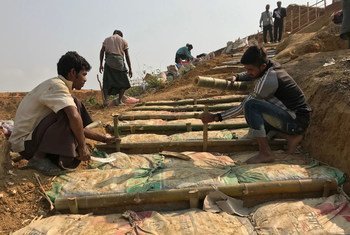
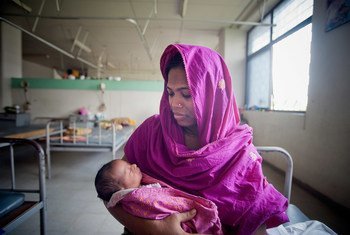
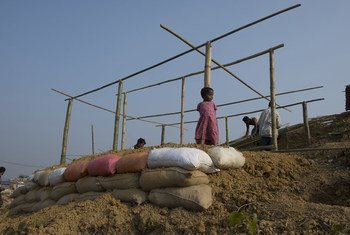
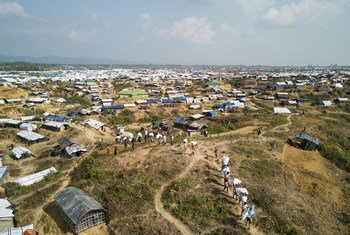
PEACE VIGIL: UN Headlines February 1-27, 2018 from UN News Cent...: please click link to read the full story UNHCR/Caroline Gluck Ahead of monsoon season, UN supports Bangladesh’s effor...

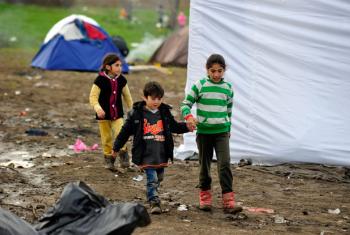
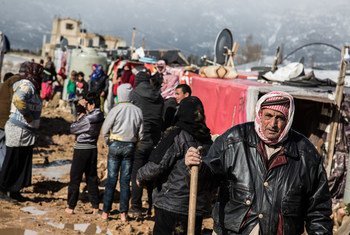
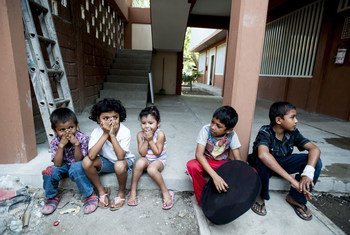
.jpg/image350x235cropped.jpg "Refugee families struggling on the Greek island of Samos.")
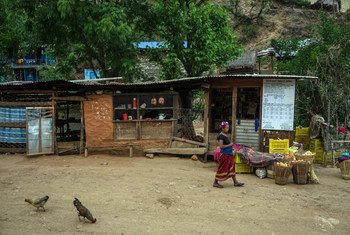
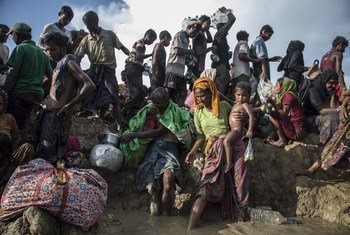
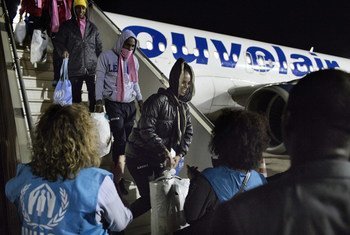
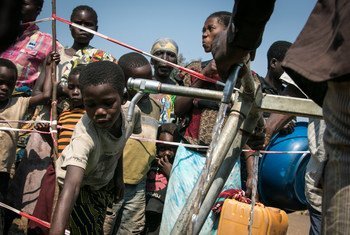
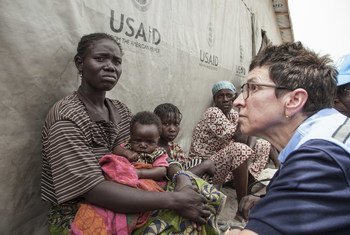
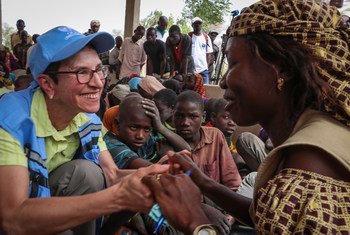
.jpg/image350x235cropped.jpg "Newly displaced Congolese refugees at the UNHCR emergency centre in Sebagoro Uganda.")


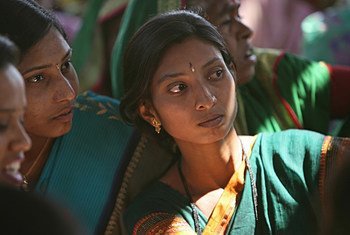
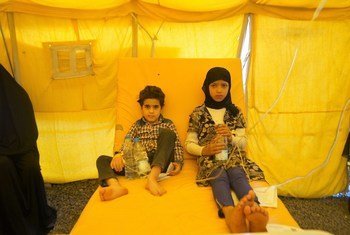

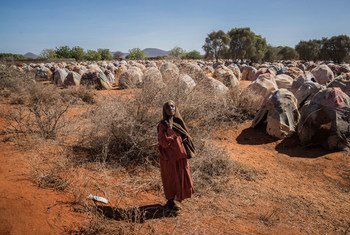
.jpg/image350x235cropped.jpg "A woman walks in drought-hit Salaxley village, 15 kilometers south of Garowe in Puntland, one of the regions hit by a severe drought. UN Photo/Ilyas Ahmed")

.jpg/image350x235cropped.jpg "Group of Congolese women showing the number of their children who have been abducted from their families during the conflict in Tanganyika province.")
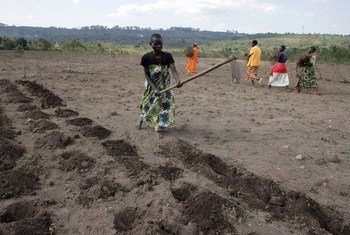
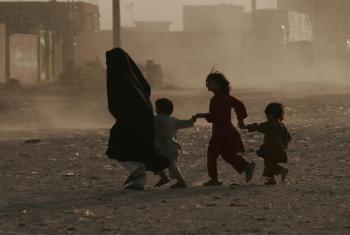
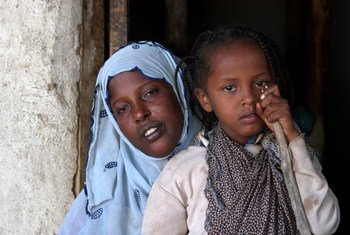
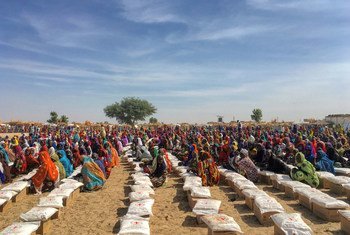
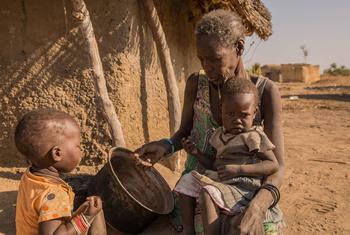
.jpg/image350x235cropped.jpg "A woman walks through a village in Chad. (file)")



Monday, February 12, 2018
Wellness for Peace Education on Climate Change: UN chief says Global Goals must be a blueprint for...
Wellness for Peace Education on Climate Change: UN chief says Global Goals must be a blueprint for...: United Nations Secretary-General António Guterres highlighted the importance of engagement and empowerment to transform the Sustaina...

UN chief says Global Goals must be a blueprint for fair globalization
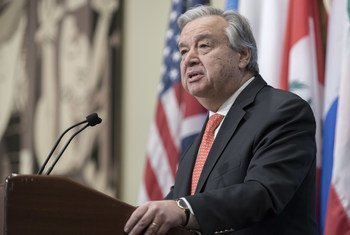
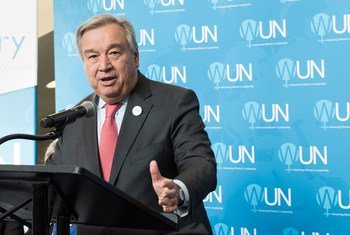
United Nations Secretary-General António Guterres highlighted the importance of engagement and empowerment to transform the Sustainable Development Goals (SDGs) into benefits for all people worldwide and called on all sectors of the society to actively involve themselves in this endeavour.
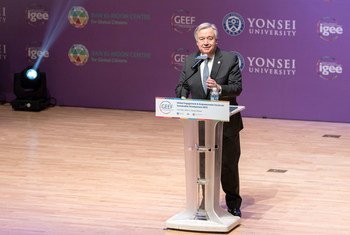
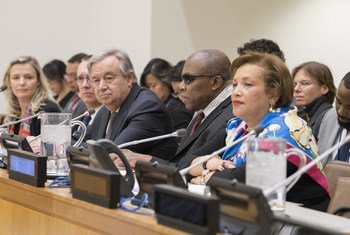
Speaking at the inaugural Global Engagement & Empowerment Forum on Sustainable Development, held at Yonsei University in Seoul, the capital of the Republic of Korea, the Secretary-General stressed that efforts to implement the 2030 Agenda for Sustainable Development need to “go beyond diplomatic efforts and Government programmes.”
The civil society, academia and the private sector – all have to be mobilized – to find the resources needed to achieve the Goals and apply them in the best possible bay.
Mr. Guterres also cautioned against rising inequality across the globe and said that this feeling of being “left behind” undermines the confidence of people, communities and regions, in governments as well as international organizations like the UN.
He told the audience, which included former Secretary-General Ban Ki-moon and the President of the General Assembly Miroslav Lajčák that this undermining of trust ultimately results in increased instability.
At the same time, massive challenges such as climate change, rapid population growth, unplanned urbanization, large scale movement of people, food insecurity and water scarcity also contribute to further fragility multiply the negative impacts of the threats to global security.
“This means that we need enormous efforts, engagement and empowerment to make the blueprint of the SDGs the tools with which we are able to reach a fair globalization,” said the UN chief.
He also highlighted that financing is critical to ensure that there are sufficient resources to implement the sustainable development agenda and in that context, urged the international community to strengthen their fight against tax evasion, money laundering, and illicit flows of capital.
For instance, in Africa, these illicit activities account for more than total official development aid (ODA) that flows into the continent, said Mr. Guterres.
Further, in the implementation of the SDGs, he urged everyone to not only respond to the problems of the past but also respond to the problems of the future and on all actors to create conditions for these transformations to be absorbed by the society to enable people to adapt to new scenarios.


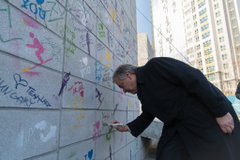
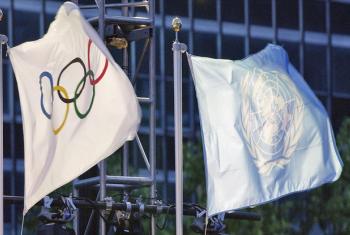
Touring Olympic village at #PyongChang2018, I was moved to see people from different cultures, different religions and different ways to see the world, all ready to compete in the Olympic spirit. We could use more of that spirit of solidarity & mutual respect all over the world.

It is critical that everyone joins into these discourses to ensure that we can translate all these new tools into tools that work for the improvement of humankind, said Mr. Guterres.
While at Yonsei University, Secretary-General Guterres also held a meeting with his predecessor, Ban Ki-moon.
Also today, the current and former Secretaries-General, along with the President of the General Assembly, met with met with the Prime Minister of the Republic of Korea, Lee Nak-yon.
Departing Seoul, the Secretary-General and his delegation drove to the site of the PyeongChang Olympic Winter Games. On site, he toured the Olympic village at Gangneung, where he was able to meet with a number of athletes, including Cheyenne Goh, the first Singaporean ever to qualify for the Olympic Winter Games. The Secretary-General also met and encouraged competitors from Switzerland, Hungary and China.
In the evening, the Secretary-General attended the official dinner hosted by the President of the Olympic Committee, Thomas Bach, for visiting dignitaries.
Wellness for Peace Education on Climate Change: UN: Well-planned and managed cities can drive sust...
Wellness for Peace Education on Climate Change: UN: Well-planned and managed cities can drive sust...: The head of the UN Human Settlements Programme ( UN-Habitat ) said on Wednesday that a week-long conference on sustainable urban developme...
UN: Well-planned and managed cities can drive sustainable development
The head of the UN Human Settlements Programme (UN-Habitat) said on Wednesday that a week-long conference on sustainable urban development that kicked off Wednesday in the Malaysian capital, Kuala Lumpur, will open a “global conversation about our cities and human settlements.”
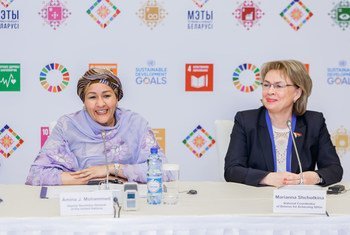
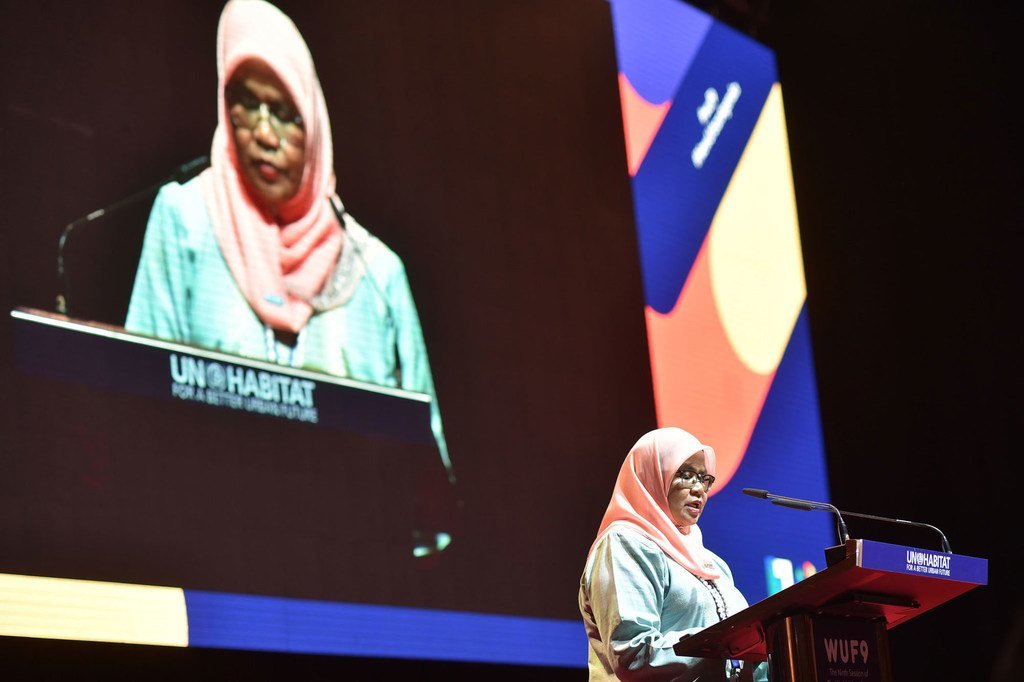
“With its genuine openness and inclusive nature, the World Urban Forum (WUF9) is unique on the United Nations conference circuit,” said Maimunah Mohd Sharif, Executive Director of UN-Habitat in her remarks to the opening of the Forum, which runs through Saturday, 13 January.
“It is a chance for stakeholders from all over the world – from ministers, local government and urban planners, to civil society groups, the private sector, academia and the media – to contribute to the global conversation about our cities and human settlements,” she added.
Ms. Sharif called WUF9 a platform where people from all walks of life share their experience of finding homes, jobs and lives in urban spaces around the world and a chance for some of the world’s most marginalized to highlight their experiences in being denied some of the advantages cities pose.
For current and future partners, the UN-Habitat chief saw the Forum as an opportunity to showcase the innovative ideas and solutions to challenges being confronted in urban and rural human settlements – and to learn from experts in the field.
Ms. Sharif maintained that WUF9 is “the ideal platform to debate the contribution that positive urban development makes to delivery of the Sustainable Development Goals (SDGs), in particular Goal 11, and the New Urban Agenda,” which was adopted in 2016 by the UN conference known as Habitat III.
Recent debates and studies have indeed acknowledged that sustainable urbanization is an essential tool for addressing the global challenges of poverty, exclusion, conflict and climate change.
“The New Urban Agenda comes at a critical moment, when for the first time in history over half of the world’s population is residing in cities,” she said, which, if planned and managed well, can be “the main tool for sustainable development and a solution to many of the challenges our planet is facing today.”
WUF9 is the first major milestone after the adoption of the New Urban Agenda, which lays out the vision for future cities based on the science of urban development providing tools in crucial areas.
Barely three weeks into her tenure as the UN-Habitat chief, Ms. Sharif said it is “an honour and a privilege” that the Forum, which is held every two years in different parts of the world, was being hosted in her native Malaysia, saying “Kuala Lumpur will have the chance to showcase some of its own urban innovations.”
She concluded her statement with the assertion that she looked forward to joining “the global conversation on promoting socially, economically and environmentally sustainable cities for all.”
Wellness for Peace Education on Climate Change: #Nepal: Over 14,000 farmers in rural area to benef...
Wellness for Peace Education on Climate Change: #Nepal: Over 14,000 farmers in rural area to benef...: Thousands of family farmers are expected to benefit from a United Nations Development Programme ( UNDP ) initiative in Nepal that uses...
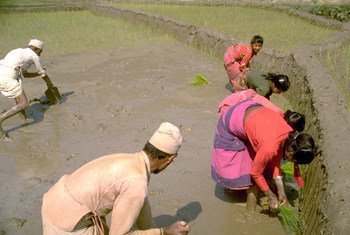
Thousands of family farmers are expected to benefit from a United Nations Development Programme (UNDP) initiative in Nepal that uses an innovative approach to build both the farmers’ capacities as well as add value to their products.
Being implemented in partnership with the Government of Nepal, the Cooperative Market Development Programme aims to establish and operationalize cooperative market chain of fruits and vegetables to increase farmers’ income and other livelihood opportunities.
“This [partnership] will directly benefit thousands of Nepali farmers over the next five years, through crucial support in modernizing their production and market chain,” said Renaud Meyer, the UNDP Country Director for Nepal.
“The active engagement and financing from the Ministry [of Cooperatives and Poverty Alleviation] shows strong commitment, leadership and ownership of the programme,” he added.
According to UNDP-Nepal, the Programme focuses on six districts near the country’s capital, Kathmandu, which despite having a number of farmers’ cooperative groups, are plagued by poor infrastructure, lack of transport and storage facilities, inadequate access to market information as well as regulatory and institutional bottlenecks.
In addition to improving infrastructure, the initiative also aims to enhance quality, quantity and consistency of the supply of fruits and vegetables as well as train farmers on employing better techniques, as well as building their marketing and institutional capacity.
In all, about 14,000 farmers and their families are expected to benefit from the initiative, which is also expected to contribute to the South Asian country’s implementation of Sustainable Development Goals 1 and 2 on ending poverty in all its forms, and ending hunger and achieving food security, respectively.
Wellness for Peace Education on Climate Change: UNICEF: ‘Protect children and their digital footpr...
Wellness for Peace Education on Climate Change: UNICEF: ‘Protect children and their digital footpr...: Every half a second, every day, a child goes online for the first time – tapping into all the great opportunities the Internet has to offe...
UNICEF: ‘Protect children and their digital footprint
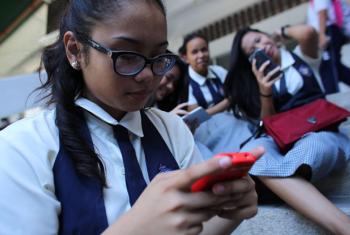
Every half a second, every day, a child goes online for the first time – tapping into all the great opportunities the Internet has to offer, but facing grave risks, the United Nations Children’s Fund (UNICEF) said Tuesday, calling for urgent action to protect them from sexual exploitation, cyberbullying and the misuse of their private information.
“The potential of connectivity makes it easier for children to connect with their peers anywhere in the world […] is a tool for children’s empowerment and engagement with their communities. However, this connectivity puts them at risk of their private information, access to harmful content, and cyberbullying,” said Sheldon Yett, UNICEF Pacific Representative.
As outlined in The State of the World’s Children 2017: Children in a digital world Worldwide, one-in-three internet users is a child, and yet too little is done to protect them from digital world perils.
“Every day, thousands of children are going online for the first time, which opens them up to a flood of dangers we are just coming to appreciate, let alone address,” said Laurence Chandy, UNICEF Director of Data, Research and Policy.
“While governments and the private sector have made some progress in formulating policies and approaches to eliminate the most egregious online risks, more effort must be made to fully understand and protect children’s online lives,” he added.
UNICEF is working with governments in the Pacific to deliver cyber safety programmes particularly in Tonga and Samoa and provide tips to parents on how to protect their children online.
“Collective action – by governments, the private sector, children’s organizations, academia, families and children themselves – is needed to level the digital playing field and ensure safer internet spaces for children,” Mr. Chandy affirmed.
The report underscores that everyone is obliged to protect children in the digital world, including governments, families, schools and other institutions – with a special note that technology and telecommunication industries have a significant responsibility to shape the impact of digital technology on children.
UNICEF is calling for renewed urgency and cooperation among governments, civil society, UN agencies and, most significantly, the private sector, to put children at the centre of digital policy by coordinating global, regional and national responses; safeguarding children’s privacy; empowering children online through more equitable access and digital literacy; and investing in better evidence about access, opportunities and risks for children online.
“In the time it takes to click on a link, a child somewhere begins creating a digital trail which those not necessarily considering the child’s best interest can follow and potentially exploit,” Mr. Chandy stressed.
“As younger and younger children join the Internet, the need to have a serious discussion about how to keep them safe online and secure their digital footprint becomes increasingly urgent,” he concluded.
Sunday, February 11, 2018
Wellness for Peace Education on Climate Change: UN: Bridging gap between relief and development ca...
Wellness for Peace Education on Climate Change: UN: Bridging gap between relief and development ca...: A surge in conflict-induced needs in Africa and the Middle East, coupled with an increase in climate shocks that pummel the most vul...
UN: Bridging gap between relief and development can meet immediate needs, lessen vulnerability
A surge in conflict-induced needs in Africa and the Middle East, coupled with an increase in climate shocks that pummel the most vulnerable everywhere, have given fresh urgency to calls for the international community to work in a new way that not only ends humanitarian needs but reduces them over time, United Nations Secretary-GeneralAntónio Guterres said.
Addressing leaders gathered for a high-level event held as part of the African Union Summit, which has been running since last week in the Ethiopian capital, Addis Ababa, Mr. Guterres underscored that this new way of working is not about shifting funding from development to humanitarian programmes or vice-versa.
“It is about recognizing common goals and optimizing existing resources and capabilities to help all people in situations of risk, vulnerability and crisis. It is about working better together to reduce humanitarian needs over the medium to long-term,” said the UN chief, spotlighting the aim of one of the key outcomes of the 2016 World Humanitarian Summit.
Two years after the international community outlined the changes that are needed to alleviate suffering, reduce risk and lessen vulnerability, Mr. Guterres said it was clear the call to bridge the humanitarian-development divide will take time and a diverse range of actors, including those outside the UN system.
“We must recommit to a focus on results and holding ourselves accountable by fully articulating collective outcomes,” he said.
Amid a surge in conflict-induced needs in Syria, Yemen the Democratic Republic of the Congo (DRC), South Sudan and elsewhere, the UN chief said he had launched a push in diplomacy for peace, including mediation, to end and prevent conflict.
We must break down the silos that have existed for too long between humanitarian and development actors UN chief Guterres
As for the increasingly frequent and more intense climate shocks that are also creating record humanitarian needs, and heavily impacting the most vulnerable, the international community must redouble its efforts to address climate change, as well as to increase the resilience of those impacted by drought, floods and other disasters.
“We have a moral obligation to do better and we have the tools and knowledge to deliver on that obligation,” said the Secretary-General, underscoring: “We must break down the silos that have existed for too long between humanitarian and development actors.”
He said experience from countries like Ethiopia, Uganda, Yemen and Somalia, where the new approach is working, offers four valuable lessons:
- The UN and development partners must strengthen the capacities of national and local actors to effectively respond to needs, risk and vulnerability;
- Collectively start from a common understanding of the challenges and then sharing data, information and analysis;
- Carry out risk-informed joint planning, with governments and all partners, to reach those furthest behind; and
- Redesign the financing architecture to promote predictability, flexibility and multi-year financing, as well as engage international financing institutions and the private sector actors, including insurance actors, to develop innovative solutions.
Noting that the world spends much more energy and resources managing crises than preventing them, the Secretary-General said the UN must uphold a strategic commitment to a 'culture of prevention,' and he pledged to work with Africa “towards ending suffering and restore the human dignity of every person.”
Saturday, February 10, 2018
PRAYERS FOR PEACE: #PrayforPeace #GreekIslands: Women and children th...
PRAYERS FOR PEACE: #PrayforPeace #GreekIslands: Women and children th...: Asylum seekers are reporting sexual harassment and violence at some sub-standard reception centres on Greek islands – where even bathing d...
#PrayforPeace #GreekIslands: Women and children threatened by sexual violence at refugee reception centres
Asylum seekers are reporting sexual harassment and violence at some sub-standard reception centres on Greek islands – where even bathing during the daytime can be dangerous – despite Government measures to address the dire living conditions, the United Nations refugee agency
“In 2017, UNHCR [the Office of the UN High Commissioner for Refugees] received reports from 622 survivors of sexual and gender-based violence on the Greek Aegean islands, out of which at least 28 per cent experienced [such violence] after arriving in Greece,” UNHCR spokesperson Cécile Pouilly said Friday at the regular press briefing in Geneva.
Women reported inappropriate behaviour, sexual harassment and attempted sexual attacks as the most common forms of such violence.
“The situation is particularly worrying in the Reception and Identification Centres (RIC) of Moria (Lesvos) and Vathy (Samos), where thousands of refugees continue to stay in unsuitable shelter with inadequate security,” she added.
Some 5,500 people are in these centres, which is double their intended capacity. Reports of sexual harassment in Moria are particularly high.
“In these two centres,” Ms. Pouilly continued, “bathrooms and latrines are no-go zones after dark for women or children, unless they are accompanied. Even bathing during daytime can be dangerous. In Moria, one woman told our teams that she had not taken a shower in two months from fear.”
Identifying and helping survivors is hampered by a reluctance to report assaults out of discrimination concerns, stigma and retaliation, helplessness and insufficient trust to open up – including to UNHCR and medical and mental health experts from national services. Therefore, the actual number of incidents is likely to be higher than reported.
Over the past weeks, the authorities have accelerated transfers to the mainland, slightly reducing overcrowding, but crowded conditions continue to hinder outreach and prevention activities.
“Insecurity is another problem,” the spokesperson stressed. “Although there are police patrols, these remain insufficient, particularly at night, and don’t cover extended areas adjacent to the RICs, where people stay in tents without any security presence.”
Conditions are also building frustration among people, leading to a difficult and tense security environment, further raising the risk of sexual and gender-based violence.
While UNHCR welcomes Government measures to reduce the risk of sexual and gender-based violence, further steps must be taken to protect those in reception centres, including children, women and men.
Ms. Pouilly listed the steps, which involved gender separation – including separate shelters and secure and well-lit wash areas; improved conditions and services; greater police presence – with additional policewomen; more lighting in public areas; increased mainland transfers to ease overcrowding; additional staff dedicated to deal with the issue; and enhanced awareness-raising activities.
Exposure to sexual and gender-based violence worsens the already precarious experience of those fleeing war-torn countries and crossing sometimes dangerous territory to reach a safe haven.
“UNHCR will continue to work with and remains ready to support the Government to strengthen its operational response and build capacity, to prevent sexual and gender-based violence and to identify and refer survivors of [such violence] to appropriate services and shelters,” Ms. Pouilly concluded.
PRAYERS FOR PEACE: #Pray4Peace: #Yemen Raging violence displaces more...
PRAYERS FOR PEACE: #Pray4Peace: #Yemen Raging violence displaces more...: Yemen is the world’s largest humanitarian crisis with more than 22 million in need, fuelled by ongoing conflict, a breakdown in public ser...
#Pray4Peace: #Yemen Raging violence displaces more than 85,000 civilians
Yemen is the world’s largest humanitarian crisis with more than 22 million in need, fuelled by ongoing conflict, a breakdown in public services and a collapsing economy.
“We are particularly concerned for those that remain in areas close to hostilities in Taiz and Hudaydah governorates,” said Cécile Pouilly, spokesperson for the Office of the UN High Commissioner for Refugees (UNHCR), told reporters in Geneva, Switzerland.
“As a result of prolonged fighting in those two governorates, conditions continue to deteriorate, exposing people to violence and disease without access to basic services,” she added, noting that the agency was “alarmed” as hundreds of people are forced to flee their homes each day, due to increasing military operations, particularly on the west coast.
Most of those displaced in these two governorates are trapped inside their homes or in caves as ground clashes, aerial bombardment and sniper fire rage around them.
In addition to new displacements from those fleeing the coast, UNHCR is also observing a spike from other frontline areas, including Yemen’s border governorates.
Meanwhile, the International Organization for Migration (IOM) has launched an appeal for $96.2 million to fund its 2018 response for the humanitarian crisis in Yemen.
“Three years of conflict have inflicted suffering on millions, affecting every Yemeni – man, woman or child,” said William Lacy Swing, the UN migration agency’s Director General, from its headquarters in Geneva.
“With armed conflict ongoing, a stalled peace process and an economic blockade, Yemen is in the grips of a devastating protracted humanitarian and developmental crisis,” he added.
PEACE VIGIL: Olympic message of peace is universal, UN chief sa...
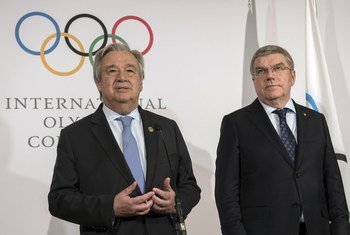
PEACE VIGIL: Olympic message of peace is universal, UN chief sa...: Secretary-General António Guterres (left) and Thomas Bach, President of the IOC, hold a joint press encounter at the IOC office in ...
United Nations Secretary-General António Guterres called on everyone to recognize and promote the Games’ universal message of peace and tolerance.
“The Olympic spirit allows people to be together, from all over the world, to respect each other, to assert the values of tolerance, of mutual understanding that are the basic elements for peace to be possible,” Mr. Guterres told journalists in Pyeongchang.
Obviously, in the present context, he said, there is a lot of attention for this message of peace in relation to the Korean Peninsula, but the Olympic message of peace is not local.
“It is universal. It’s for the world. It is valued in Korea as it is valued everywhere where we struggle to try to address the many complex conflicts that we are facing,” he said.
The UN chief also extended his appreciation and pride to be at the Winter Olympics and highlighted the cooperation between UN and the International Olympic Committee (IOC), as well as the values for which the IOC and its sister organization, the International Paralympic Committee, stand.
The Winter Olympics opened earlier today (local time) with cultural and artistic performances as well as the customary parade of athletes, which was the delegations from the Democratic People’s Republic of Korea and the Republic of Korea under one flag, carried together by a sportsperson from each team.

Olympic torch ‘a symbol of hope’ – UN General Assembly President
Also today, the opening ceremony saw the conclusion of the long journey of the Olympic Torch that started in November 2017.
In the last leg of its journey, the flame was carried, among others, by Miroslav Lajčák, the President of the UN General Assembly and Thomas Bach, the President of the IOC.
Outlining the commonalities between sport and diplomacy – both about peace and bringing people together – Mr. Lajčák highlighted that the Olympic torch is “probably the best symbol in our times in our world.”
“[It] is a symbol of peace, a symbol of youth, a symbol of sport, communication, a symbol of tradition, a symbol of hope.” he said.
Subscribe to:
Posts (Atom)