Thursday, October 25, 2018
Wellness Pilipinas International: WHO Declaration of Astana: New global commitment t...
New global commitment to primary health care for all at Astana conference
Declaration of Astana charts course to achieve universal health coverage, 40 years since declaration on primary health care in Alma-Ata
25 October 2018
News Release
Astana, Kazakhstan
Русский
Countries around the world today agreed to the Declaration of Astana, vowing to strengthen their primary health care systems as an essential step toward achieving universal health coverage. The Declaration of Astana reaffirms the historic 1978 Declaration of Alma-Ata, the first time world leaders committed to primary health care.
“Today, instead of health for all, we have health for some,” said Dr. Tedros Adhanom Ghebreyesus, Director-General of the World Health Organization (WHO). “We all have a solemn responsibility to ensure that today’s declaration on primary health care enables every person, everywhere to exercise their fundamental right to health.”
While the 1978 Declaration of Alma-Ata laid a foundation for primary health care, progress over the past four decades has been uneven. At least half the world’s population lacks access to essential health services – including care for noncommunicable and communicable diseases, maternal and child health, mental health, and sexual and reproductive health.
“Although the world is a healthier place for children today than ever before, close to 6 million children die every year before their fifth birthday mostly from preventable causes, and more than 150 million are stunted,” said Henrietta Fore, UNICEF Executive Director. “We as a global community can change that, by bringing quality health services close to those who need them. That’s what primary health care is about.”
The Declaration of Astana comes amid a growing global movement for greater investment in primary health care to achieve universal health coverage. Health resources have been overwhelmingly focused on single disease interventions rather than strong, comprehensive health systems – a gap highlighted by several health emergencies in recent years.
“Adoption of the Declaration at this global conference in Astana will set new directions for the development of primary health care as a basis of health care systems,” said Yelzhan Birtanov, Minister of Health of the Republic of Kazakhstan. “The new Declaration reflects obligations of countries, people, communities, health care systems and partners to achieve healthier lives through sustainable primary health care.”
UNICEF and WHO will help governments and civil society to act on the Declaration of Astana and encourage them to back the movement. UNICEF and WHO will also support countries in reviewing the implementation of this Declaration, in cooperation with other partners.
Notes to editors:
The Global Conference on Primary Health Care is taking place from 25-26 October in Astana, Kazakhstan, co-hosted by WHO, UNICEF and the Government of Kazakhstan. Participants include ministers of health, finance, education and social welfare; health workers and patient advocates; youth delegates and activists; and leaders representing bilateral and multilateral institutions, global health advocacy organizations, civil society, academia, philanthropy, media and the private sector.
The Declaration of Astana, unanimously endorsed by all WHO Member States, makes pledges in four key areas: (1) make bold political choices for health across all sectors; (2) build sustainable primary health care; (3) empower individuals and communities; and (4) align stakeholder support to national policies, strategies and plans.Wellness Pilipinas International: WHO Declaration of Astana: New global commitment t...: Declaration of Astana charts course to achieve universal health coverage, 40 years since declaration on primary health care in Alma-Ata 25...


Wednesday, October 24, 2018
UN agency ramps up effort to counter growing nuclear threat from cyberspace
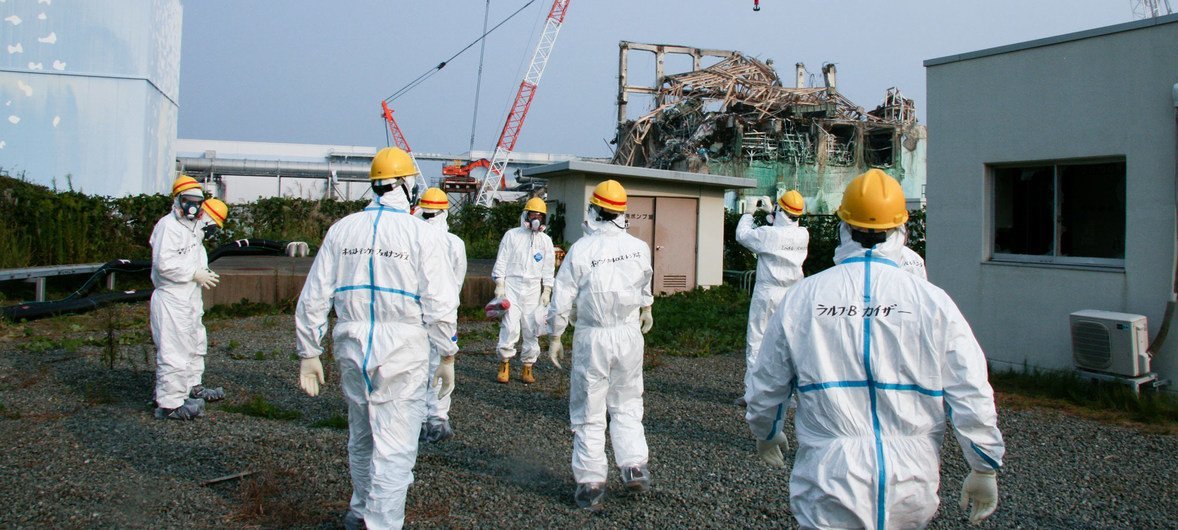
Photo: IAEA/Giovanni Verlini
IAEA International Remediation Expert Mission examines Reactor Unit 3 during a visit to TEPCO’s Fukushima Daiichi Nuclear Power plant.
24 October 2018
Peace and Security
As part of its efforts to strengthen nuclear security worldwide, the International Atomic Energy Agency (IAEA), announced on Wednesday that it has developed a training programme designed to protect facilities from the growing threat of cyber-attacks.
The programme kicked off in October with a course entitled “Protecting Computer-Based Systems in Nuclear Security Regimes,” which brought together 37 participants from 13 countries for two weeks of immersive training on best practices in computer security.
The IAEA is the world's central intergovernmental forum for scientific and technical co-operation in the nuclear field.
The new course, developed together with the US Department of Energy’s National Nuclear Security Administration (NNSA) and hosted by the Idaho National Laboratory, is the first in a series of IAEA information and computer security courses focusing on raising awareness of the threat posed by cyber-attacks, and their potential impact on nuclear facilities around the world.
Participants tested their skills on mock-ups that accurately replicate state-of-the-art digital systems common in today’s control rooms, where digital technologies provide functions that support safe operations, security, and the protection of sensitive information.
“Everyone with responsibility for nuclear security must have a thorough understanding of the vulnerabilities of their systems,” said Raja Adnan, Director of the IAEA’s Division of Nuclear Security, adding that “they must know how to prevent and mitigate possible cyber-attacks on those systems.”
In June, IAEA Director-General Yukiya Amano warned a Paris conference on the use of digital technology in the nuclear industry, that instrumentation and control systems in nuclear power plants could be subject to cyber-attacks, with potentially serious consequences.
He urged the nuclear industry and national regulators to build up the data and experience needed to ensure that new systems meet all reliability and performance requirements.
The IAEA, which is headquartered in the Austrian capital, Vienna, works for the safe, secure and peaceful uses of nuclear science and technology, contributing to international peace and security and the United Nations' Sustainable Development Goals.
NUCLEAR ENERGY
https://news.un.org/en/story/2018/10/1024072
Friday, October 19, 2018
Wellness Pilipinas International: International lead poisoning prevention week of ac...

The issue
Lead poisoning is preventable, yet the Institute for Health Metrics and Evaluation (1) has estimated that, based on 2016 data, lead exposure accounted for 540 000 deaths and 13.9 million years lost to disability and death due to long-term health effects, with the highest burden in developing regions. Of particular concern is the role of lead exposure in the development of intellectual disability in children.
Even though there is wide recognition of the harmful effects of lead and many countries have taken action, exposure to lead, particularly in childhood, remains of key concern to health care providers and public health officials worldwide.
An important source of domestic lead exposure, particularly in children, is paint containing high levels of lead. These paints are still widely available and used in many countries for decorative purposes, although good substitutes without lead are available.
At the World Summit on Sustainable Development in 2002, governments called for lead paint to be phased out. The Global Alliance to Eliminate Lead Paint (Lead Paint Alliance) was formed in 2011 to promote the phase-out of the manufacture and sale of paints containing lead and eventually to eliminate the risks that such paints pose. A key requirement for achieving this is the establishment of appropriate national regulatory frameworks to stop the manufacture, import, export, distribution, sale and use of lead paints and products coated with lead paints. In its Business Plan, the Lead Paint Alliance set a target that by 2020 all countries should have in place such a regulatory framework. In a survey carried out by WHO and the United Nations Environment Programme, (UN Environment), which jointly coordinate the Lead Paint Alliance, as of 30 June 2018 only 69 governments confirmed that they have legally binding control measures on lead paint.
But WHO has 194 Member States, so there is still, a significant gap to achieving the 2020 goal set by the Global Alliance to Eliminate Lead paint that all countries should have banned lead paint.
In eliminating lead paint countries will contribute to the achievement of the following Sustainable Development Goal targets:
3.9: By 2030 substantially reduce the number of deaths and illnesses from hazardous chemicals and air, water, and soil pollution and contamination.
12.4 By 2020, achieve the environmentally sound management of chemicals and all wastes throughout their life cycle, in accordance with agreed international frameworks, and significantly reduce their release to air, water and soil in order to minimize their adverse impacts on human health and the environment.
The objectives
During the campaign week, the Global Alliance to Eliminate Lead Paint aims to:
Raise awareness about health effects of lead poisoning;
Highlight countries and partners' efforts to prevent particularly childhood lead poisoning; and
Urge further action to eliminate lead paint through regulatory action at country level.
Related links
Report on 2017 campaign outcomes
pdf, 2.02Mb
Countries with legally binding controls on lead paint
Read more about Lead
Official website of the Global Alliance to Eliminate Lead Painthttp://www.who.int/ipcs/lead_campaign/objectives/en/
Wellness Pilipinas International: International lead poisoning prevention week of ac...: The issue Lead poisoning is preventable, yet the Institute for Health Metrics and Evaluation (1) has estimated that, based on 2016 dat...
Saturday, October 13, 2018
To Solve Bullying,Do not expose Children to Violence: "The importance of early childhood prevention. “Parent-child relationship is a critical factor in predicting the risk of bullying in adolescence”.
“Exposure to toxic stress, domestic violence and a violent family environment has an irreversible impact on the development of very young children”
Around 130 million, or one-in-three children worldwide experience some form of bullying, the United Nations stated in its latest report on how children can be better-protected. This form of violence has long-lasting and direct consequences for their health, school performance and overall well-being.
“Being protected from bullying is a fundamental human right,” said Marta Santos Pais, Special Representative of the Secretary-General on Violence against Children.
At an event at UN headquarters in New York, co-organized with the Governments of Mexico and Lithuania, Ms. Santos Pais presented the key findings of the Secretary-General report and welcomed the “growing interest” from the world on the matter, applauding efforts made so far in terms of policy, law and advocacy to protect the safety of children.
Earlier this year, for example, Member States agreed on the adoption of a new indicator in the monitoring of the implementation of the Sustainable Development Goals (SDGs). Indicator 4.a.2 now measures the percentage of students who have experienced bullying in the past year, by gender, and for each contributing country.
Despite such encouraging signs, the Special Representative identified several key areas where improvement was needed for Governments and institutions.
First, she emphasized the importance of early childhood prevention and noted that the “parent-child relationship is a critical factor in predicting the risk of bullying in adolescence”. According to the report, today, 176 million children under-five, witness domestic violence on a regular basis and children who bully others are twice as likely to have been exposed to domestic violence than other children.
“Exposure to toxic stress, domestic violence and a violent family environment has an irreversible impact on the development of very young children,” she said, adding that “it contributes to normalize the use of violence”.
Today, approximately 30 per cent of adolescents in 39 countries in Europe and North America, admit to bullying others at school.

"Cyber Cocoon Kids" exhibition at UN headquarters in New York, October 2018. UN Photo/Kim Haughton
In addition, Ms. Santos Pais noted that teachers also play a great role in promoting “a culture of respect and safety” in schools and that sports environments can often become contexts where competitiveness leads to “humiliation, shaming and exclusion of those who fail to win”.
“Analyses of data from Ethiopia, India, Peru and Viet Nam reveal that violence in schools, including physical and verbal abuse by teachers and by other students, is the most common reason given for disliking school, and, significantly, it is associated with lower scores in mathematics and lower self-esteem,” the report highlights.
To address these negative impacts, experts and decision-makers are lacking sufficient data to form evidence-based strategies and programmes. However, the UN Educational, Scientific and Cultural Organization (UNESCO) has committed to tackling this gap and to producing an annual report to be released in January 2019 for the first time.
Some of the initial findings published already denote that physical appearance – such as being overweight or having non-conforming gender expressions – is the main driver for bullying. Race, nationality and skin color are also high on the list. In the report, religion was not highlighted as major contributing factor.
While the term “bullying” covers physical, psychological and sexual violence (understood in this context to mean sex-related mockery and gender-based discrimination), very little data is available on the psychological occurrence of it, and countries must do more to gain a better understanding of this issue. The UNESCO report shows that girls and boys are equally affected overall by bullying, but that boys are more likely to suffer from physical violence.
Cyberbullying on the rise
Cyberbullying, which can cause profound harm as it leaves a permanent footprint online and can quickly reach wide audiences, is on the rise, UNESCO’s report notes. In seven European countries overall, the proportion of children online aged 11-16 who’ve suffered cyberbullying, increased from 7 per cent in 2010, to 12 per cent in 2014.
Countries and institutions can adopt a wide variety of measures to help reverse these trends, including carrying out awareness-raising campaigns and teacher-trainin, adopting laws that clearly define bullying and pushing schools to implement concrete actions such as helplines for children.
The report of the Secretary-General will be presented on Tuesday to the Third Committee of the General Assembly so next steps can be determined.
“Children are eager to see action to bring this manifestation of violence to an end,” said Ms. Santos Pais. “And they deserve no less!”
Note: To draw attention to how deeply cyberbullying impacts the lives of millions of children every day, the UN has launched an innovative multimedia experience at its headquarters in New York, titled “Cyber Cocoon Kids”, highlighting the abuse that children undergo online.
CHILDRENhttps://news.un.org/en/story/2018/10/1022562
“Being protected from bullying is a fundamental human right,” said Marta Santos Pais, Special Representative of the Secretary-General on Violence against Children.
At an event at UN headquarters in New York, co-organized with the Governments of Mexico and Lithuania, Ms. Santos Pais presented the key findings of the Secretary-General report and welcomed the “growing interest” from the world on the matter, applauding efforts made so far in terms of policy, law and advocacy to protect the safety of children.
Earlier this year, for example, Member States agreed on the adoption of a new indicator in the monitoring of the implementation of the Sustainable Development Goals (SDGs). Indicator 4.a.2 now measures the percentage of students who have experienced bullying in the past year, by gender, and for each contributing country.
Despite such encouraging signs, the Special Representative identified several key areas where improvement was needed for Governments and institutions.
First, she emphasized the importance of early childhood prevention and noted that the “parent-child relationship is a critical factor in predicting the risk of bullying in adolescence”. According to the report, today, 176 million children under-five, witness domestic violence on a regular basis and children who bully others are twice as likely to have been exposed to domestic violence than other children.
“Exposure to toxic stress, domestic violence and a violent family environment has an irreversible impact on the development of very young children,” she said, adding that “it contributes to normalize the use of violence”.
Today, approximately 30 per cent of adolescents in 39 countries in Europe and North America, admit to bullying others at school.
"Cyber Cocoon Kids" exhibition at UN headquarters in New York, October 2018. UN Photo/Kim Haughton
In addition, Ms. Santos Pais noted that teachers also play a great role in promoting “a culture of respect and safety” in schools and that sports environments can often become contexts where competitiveness leads to “humiliation, shaming and exclusion of those who fail to win”.
“Analyses of data from Ethiopia, India, Peru and Viet Nam reveal that violence in schools, including physical and verbal abuse by teachers and by other students, is the most common reason given for disliking school, and, significantly, it is associated with lower scores in mathematics and lower self-esteem,” the report highlights.
To address these negative impacts, experts and decision-makers are lacking sufficient data to form evidence-based strategies and programmes. However, the UN Educational, Scientific and Cultural Organization (UNESCO) has committed to tackling this gap and to producing an annual report to be released in January 2019 for the first time.
Some of the initial findings published already denote that physical appearance – such as being overweight or having non-conforming gender expressions – is the main driver for bullying. Race, nationality and skin color are also high on the list. In the report, religion was not highlighted as major contributing factor.
While the term “bullying” covers physical, psychological and sexual violence (understood in this context to mean sex-related mockery and gender-based discrimination), very little data is available on the psychological occurrence of it, and countries must do more to gain a better understanding of this issue. The UNESCO report shows that girls and boys are equally affected overall by bullying, but that boys are more likely to suffer from physical violence.
Cyberbullying on the rise
Cyberbullying, which can cause profound harm as it leaves a permanent footprint online and can quickly reach wide audiences, is on the rise, UNESCO’s report notes. In seven European countries overall, the proportion of children online aged 11-16 who’ve suffered cyberbullying, increased from 7 per cent in 2010, to 12 per cent in 2014.
Countries and institutions can adopt a wide variety of measures to help reverse these trends, including carrying out awareness-raising campaigns and teacher-trainin, adopting laws that clearly define bullying and pushing schools to implement concrete actions such as helplines for children.
The report of the Secretary-General will be presented on Tuesday to the Third Committee of the General Assembly so next steps can be determined.
“Children are eager to see action to bring this manifestation of violence to an end,” said Ms. Santos Pais. “And they deserve no less!”
Note: To draw attention to how deeply cyberbullying impacts the lives of millions of children every day, the UN has launched an innovative multimedia experience at its headquarters in New York, titled “Cyber Cocoon Kids”, highlighting the abuse that children undergo online.
CHILDRENhttps://news.un.org/en/story/2018/10/1022562
Thursday, October 4, 2018
PRAYERS FOR PEACE: PRAY FOR AFGHANISTAN: Suicide bomber killed & woun...
2 October 2018
Peace and Security
Denouncing attacks and intimidation in the week since formal campaigning began for Afghanistan’s parliamentary elections next month, the United Nations voiced outrage on Tuesday at the death of 14 civilians, killed by a suicide bomber at a campaign rally. A further 42 were wounded.
“I am outraged by attacks deliberately targeting civilians seeking to exercise their basic right to participate in elections,” said Tadamichi Yamamoto, the UN Special Representative for Afghanistan, in a statement that called for an immediate end to election-related violence.
“This violence, including today’s reprehensible attack in Nangarhar, is an assault on the constitutional rights of the people of Afghanistan.”
The UN Assistance Mission in Afghanistan (UNAMA) expressed concern around the level of violence early in the campaigning period for the 20 October elections, including intimidation and attacks against candidates, their agents and supporters.
UN Secretary-General António Guterres added his voice in a statement on Tuesday, condemning the series of lethal attacks, and reiterated that "deliberate targeting of civilians is a violation of international humanitarian law."
"The Secretary-General urges all parties to ensure a peaceful and orderly electoral process by creating a safe environment for political candidates to campaign and for citizens to exercise their right to assemble and vote," said the statement from his Spokesperson.
Since campaigning formally commenced on 28 September, there have been several attacks resulting in the killing of a candidate and three security guards of another candidate, as well as the shooting of a further candidate’s agent and son. “UNAMA urges all actors to halt all violence and intimidation against candidates and voters”, said the statement from the Mission.
Tuesday’s suicide attack appears to have deliberately targeted a crowd gathered for a campaign event, the agency said, stressing that Afghan civilians have borne the brunt of election-related violence in 2018.
It recalled the “disturbing pattern of attacks” at election-related facilities following the start of voter registration earlier this year, with the greatest loss of civilian life in a single incident, occurring on 22 April when a suicide attacker targeted a crowd gathered outside a national identity card distribution centre, in the capital Kabul, resulting in 198 civilian casualties.
https://news.un.org/en/story/2018/10/1022072PRAYERS FOR PEACE: PRAY FOR AFGHANISTAN: Suicide bomber killed & woun...: 2 October 2018 Peace and Security Denouncing attacks and intimidation in the week since formal campaigning began for Afghanistan’s parl...
UN-Habitat, the UN Office on Drugs and Crime (UNODC) and the UN Education, Scientific and Cultural Organization (UNESCO) will join the United Cities and Local Governments of Africa (UCLGA), in organizing the inaugural youth forum at the Africities Summit, to be held from 20-24 November, in Marrakech, Morocco
UN agencies inject youthful energy into sustainable development for urban Africa
Youth leaders discuss empowerment of young people and their potential for strengthening sustainable development at a meeting in Abuja, Nigeria.
2 October 2018
Underscoring the importance of fully involving the young in decisions affecting their lives, three United Nations agencies announced an innovative partnership on Tuesday with African local governments, designed to inject youthful ideas and energy into urban planning policies.
Speaking at a press briefing, where the collaboration was announced, Christopher Williams, a Director at the UN Human Settlements Programme (UN-Habitat) highlighted the fresh “wisdom and insight” young people bring to planning initiatives.
“It is essential they are involved in [local government] initiatives systematically,” he said.
Under the partnership, UN-Habitat, the UN Office on Drugs and Crime (UNODC) and the UN Education, Scientific and Cultural Organization (UNESCO) will join the United Cities and Local Governments of Africa (UCLGA), in organizing the inaugural youth forum at the Africities Summit, to be held from 20-24 November, in Marrakech, Morocco.
The initiative is all the more crucial for Africa as nearly three-quarters of the continent is under-35, noted Daniel Schatz, Programme Officer with the UNODC in New York.
“The majority of young Africans have high hopes and ambitions. However, a mismatch exists between the aspirations of young people and opportunities available to them,” he said.
“As such it is critical that partners’ programming aligns with the vision African youth have for their future and understand their true needs and desires and taps into their energy and dynamism,” he added, outlining the immense benefits young people can bring.
Dubbed the Africites Youth Forum, specific activities to be held under the partnership include the Creative Lab – a competition for 15 to 35-year olds from Africa and the diaspora, to promote entrepreneurship, and boost the realisation of the 2030 Agenda for Sustainable Development and the African Union’s Agenda 2063. The Forum will also include interactive workshops and consultative sessions on building safer and more secure cities for young people, especially young women and girls.
Wambui Kahara, a UCLGA Youth Champion, said that youth were Africa’s greatest resource:
“Young people are dynamic, energetic, resourceful, creative, innovative and adventurous”, she said, adding that they were “vital for Africa’s growth and development.”
Young people should be at the heart of implementation and monitoring of the Sustainable Development Goals (SDGs), Ms. Kahara continued, in particular SDG 11 which calls for inclusive, safe, resilient and sustainable towns and cities by 2030.
https://news.un.org/en/story/2018/10/1022102
https://news.un.org/en/story/2018/10/1022102
Wellness for Peace Education on Climate Change: Prime Minister Modi awarded for his extensive effo...
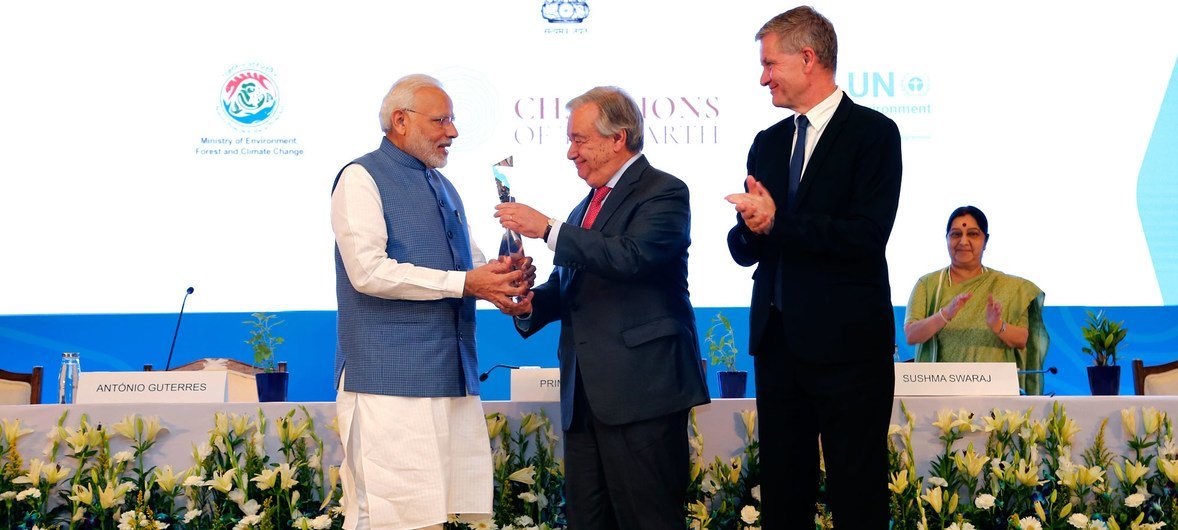
UN Photo/Deepak Malik
Secretary-General António Guterres (centre) honors Prime Minister Narendra Modi of India with the Champion of Earth award, the highest environmental honour of the United Nations, at Pravasi Bharatiya Kendra in New Delhi. UN Environment Executive Director Erik Solheim (right) looks on.
3 October 2018
SDGs
United Nations Secretary-General António Guterres on Wednesday conferred the Organization’s highest environmental honour on India’s Prime Minister, recognizing Narendra Modi’s efforts against climate change and pollution.
“Prime Minister Modi represents an extraordinary legacy,” said Mr. Guterres at the “Champions of the Earth” award ceremony, in the Indian capital New Delhi.
“Prime Minister Modi not only recognizes, knows and understands” the benefits of taking action to stop global warming, said the UN chief, but also “acts with enormous energy to make this change. And this leadership is today more necessary than ever.”
According to the UN Environment Programme (UNEP), Prime Minister Modi has been recognized for his extensive efforts to control plastic pollution, including a pledge to eliminate all single-use plastic in India, by 2022. He has also been recognized for his joint initiative with French President Emmanuel Macron to champion the International Solar Alliance – a global partnership to scale up solar energy use and reduce dependence on fossil fuels.
In his prize-giving speech, Mt. Guterres called on other world leaders to draw lessons from India and apply them in their own circumstances to “win the race against climate change.”
He also highlighted that climate action and development are not contradictory but are mutually supportive.
“The green economy is the good economy. Technology is on our side. Those that will bet on the grey economy will have a grey future, and those that, like in India, are betting on the green economy will have a dominant role in the global economy in the decades to come,” said the Secretary-General.
Prime Minister Modi, in accepting the award, said that he was doing so on behalf of millions of Indians “who protect the environment each day.”
“From fisherfolk who only take what they need or tribal communities who think of forests as their family. We will never be able to tackle climate change without bringing climate into our culture. And this is why India is taking so much action for our climate,” said the Indian leader.
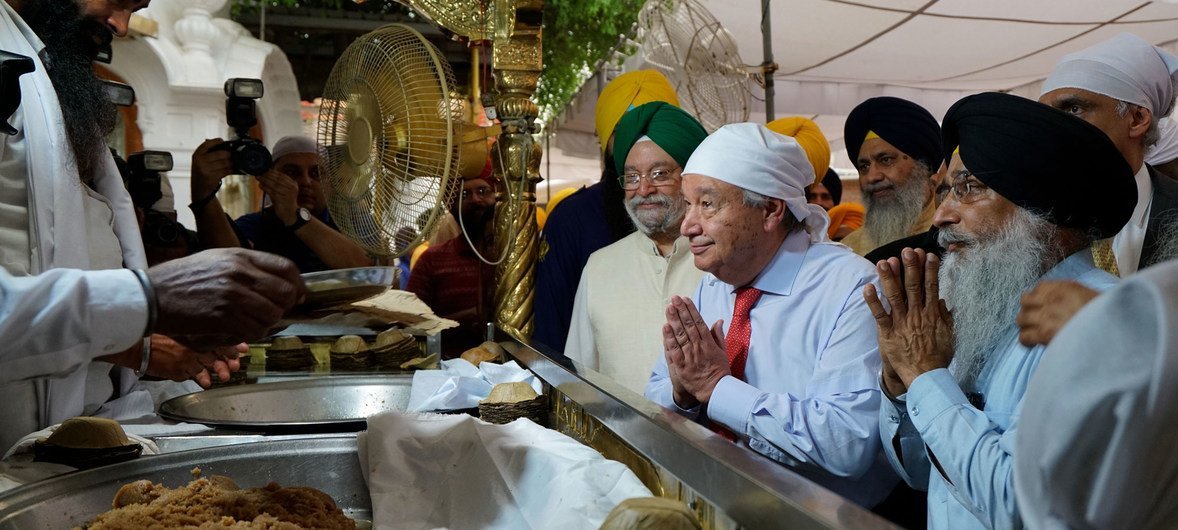
Giles Clarke
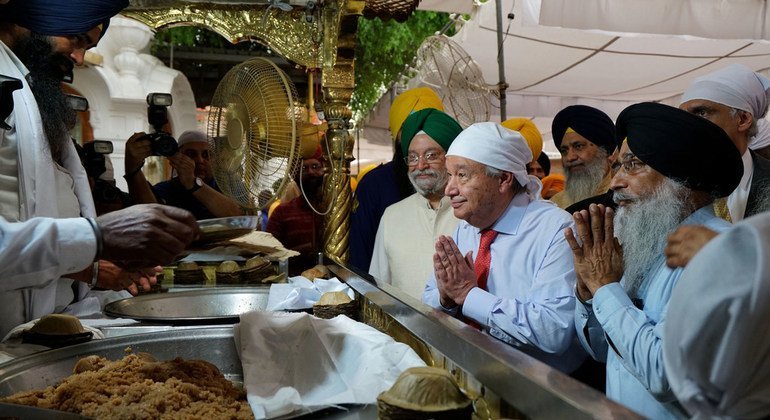
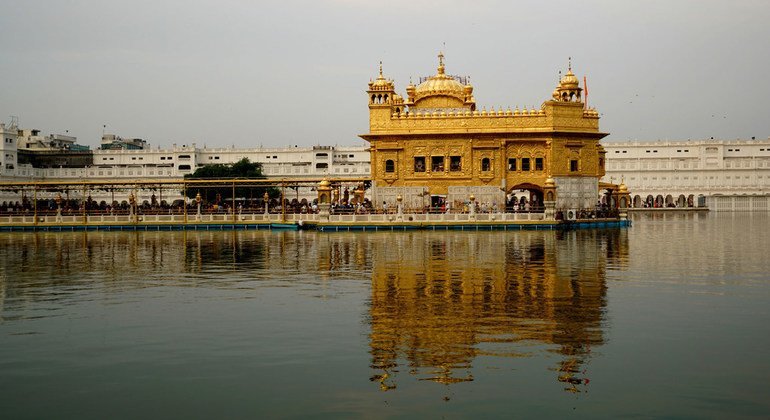
Secretary-General António Guterres pays visits to the Golden Temple in Amritsar, India, where he expressed his gratitude for a place that receives and shares with everybody.
Secretary-General shares a meal at a Langar
Also, on Wednesday, Secretary-General visited the Golden Temple in the city Amritsar, where he attended Langar – a community kitchen run by Sikh volunteers where people from all backgrounds and communities are provided nutritious food and clean water, at no cost.
During his visit, Mr. Guterres expressed his deep gratitude to the “wonderful practice that the Golden Temple represents, receiving everybody, sharing with everybody the food, but, more than the food, sharing this wonderful spirit of peace, of harmony, of understanding that we badly need in today’s world.”
The Langar at the Golden Temple is attended by thousands of people and pilgrims each day. It is the biggest community kitchen in the world, open 24 hours a day and uses no plastic or disposable utensils and cutlery.
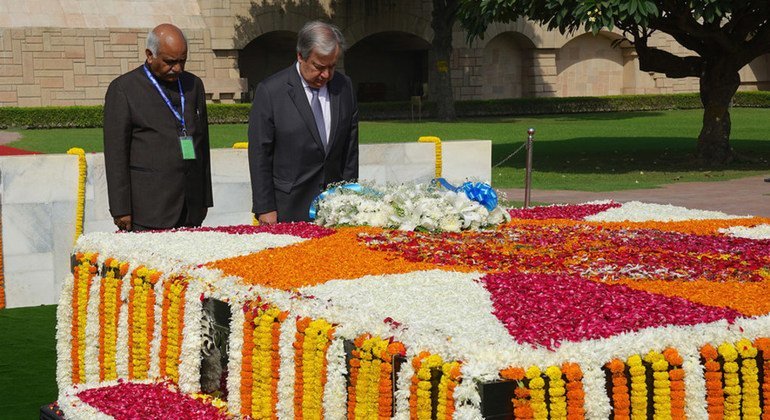
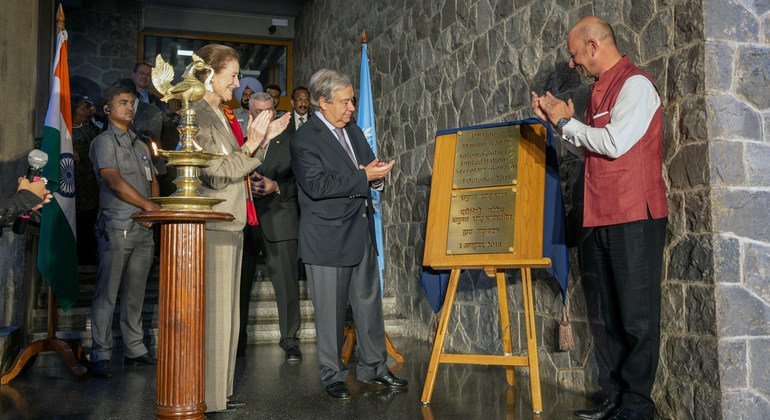
Mr. Guterres is currently on his maiden visit to India as Secretary-General, during which he paid homage to Mahatma Gandhi on the 149th anniversary of his birth; inaugurated ONE UN House – the newly-refurbished building housing UN offices; held bilateral meetings with top Indian Government officials and spoke at the Mahatma Gandhi International Sanitation Convention, among other engagements.
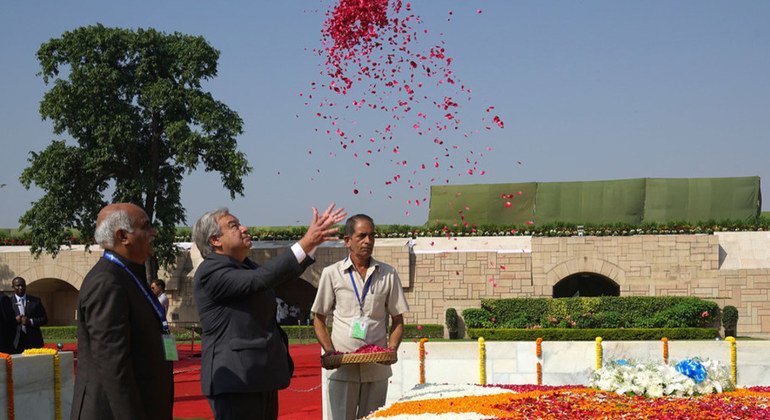
Paying respects at Gandhi memorial
On 2 October, the birth-anniversary of Mahatma Gandhi, Secretary-General Guterres (right) paid his respects to the world leader of non-violence at Raj Ghat, a memorial dedicated to the Mahatma.
Giles Clarke
Click here to view the gallery in full screen mode
UN Champions of the Earth award
Established by UNEP in 2005, the Champions of the Earth award recognizes “outstanding leaders” from Government, civil society and the private sector whose actions have had a positive impact on the environment.
Other winners of the Champions of the Earth award for 2018 are: Impossible Foods and Beyond Meat, an initiative creating high-quality vegetarian meat-alternatives; the Zhejiang River Chiefs programme, which works for protecting water from pollution as well as ecological restoration; Joan Carling, an indigenous and environmental rights activist; Cochin International Airport, the world’s first to be fully solar-powered; and French President Macron, for his international cooperation on environmental action.Wellness for Peace Education on Climate Change: Prime Minister Modi awarded for his extensive effo...: UN Photo/Deepak Malik Secretary-General António Guterres (centre) honors Prime Minister Narendra Modi of India with the Champion of Earth ...
Sunday, September 9, 2018
PEACE VIGIL: UN Headlines September 1-30, 2018 from UN News Cen...

LATEST NEWS

UN Photo/Manuel Elias
Madagascar: UN Secretary-General reaffirms support for electoral process
9 September 2018
Peace and Security
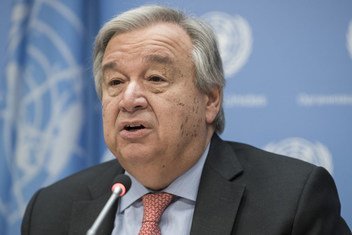
The Secretary-General of the United Nations, António Guterres, has welcomed the appointment on 7 September of Rivo Rakotovao, President of the Madagascar Senate, as acting president of the country.
UN Photo/Mark Garten
Horn of Africa: UN chief welcomes Djibouti agreement between Eritrea, Ethiopia and Somalia
8 September 2018
Peace and Security
UN Secretary-General António Guterres has welcomed Thursday's meeting in Djibouti with the foreign ministers of Eritrea, Ethiopia and Somalia with the Djiboutian head of diplomacy.

UNICEF/Alessio Romenzi
Human traffickers in Libya are posing as UN staff, says Refugee Agency
8 September 2018
Peace and Security
The UN Refugee Agency, UNHCR, has called on Libyan authorities to take action against criminals targeting desperate refugees and migrants, amid reports that smugglers and traffickers in the country are impersonating Agency staff.

UN Photo/Manuel Elias
Yemen consultations have started, insists top UN negotiator
8 September 2018
Peace and Security
A positive environment exists for building trust between the opposing parties involved in discussions for a political solution to the Yemen conflict, despite the absence of one of the delegations in Geneva and insecurity on the ground, UN Special Envoy Martin Griffiths said on Saturday.

FAO/Luis Tato
Backed by UN agency, countries set to take on deadly livestock-killing disease
7 September 2018
Health
Gathered at a major United Nations agricultural conference, over 45 countries today pledged to eradicate by 2030 a highly contagious and devastating disease responsible for the death of millions of small farm animals, at cost of more than $2 billion each year.

Photo: UPU
144 years on, Universal Postal Union meets to define its 21st Century role
7 September 2018
UN Affairs
The Universal Postal Union (UPU), one of the world’s oldest international organizations, has met in the Ethiopian capital Addis Ababa to improve its working practices and define its role in the modern world.

MINUSCA Photo
UN police investigating killing of displaced people in Central African Republic
7 September 2018
Peace and Security
Perpetrators behind the killing of a number of people displaced by conflict in the Central African Republic (CAR) must be brought to justice, the UN peacekeeping operation in the country said on Friday.
Audio - 3'33" Playlist
UN Photo/Loey Felipe
Halt ‘imminent’ executions of Kurdish prisoners, UN experts urge Iran
7 September 2018
Human Rights
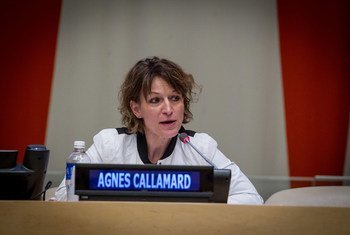
Two independent United Nations human rights experts have called on the Iranian Government to halt the execution of three prisoners from the Kurdish community, amid concerns that they did not receive a fair trial and allegations that they were tortured while in detention.

UNICEF/UNI150195/Diffidenti
‘Sanctity of human civilian life’ in Idlib must win out, urges UN Syria Envoy
7 September 2018
Peace and Security
With the ingredients for a “perfect storm” brewing in the Syrian province of Idlib, the international community cannot allow civilians there to succumb to such a fate, the UN Envoy for the country told the Security Council on Friday.
UNMISS/Isaac Billy
‘Children’s crisis’ in South Sudan must be addressed, says top UN official calling for real accountability
7 September 2018
Human Rights
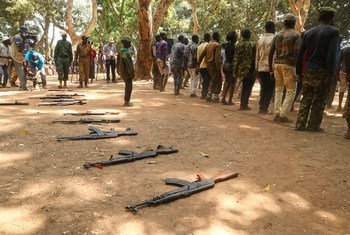
Virginia Gamba, the United Nations Special Representative for Children and Armed Conflict, on Friday called for much greater accountability and effort, to prevent grave violations against children across the world’s youngest nation, South Sudan.

UNICEF
WFP and UNICEF prepare for the worst in Syria’s Idlib, as insecurity mars start of another school year
7 September 2018
Peace and Security
Emergency food supplies for hundreds of thousands of people in Syria’s Idlib are “ready for distribution” in the event of mass displacement caused by a full-scale military offensive on the last opposition-held region, the World Food Programme (WFP) said on Friday.

UN Photo/Eskinder Debebe
Security Council must work towards ‘common approach’ as investigations continue into alleged Syria chemical attack
6 September 2018
Peace and Security
Experts continue to gather information related to an alleged chemical weapons attack in Douma, Syria, earlier this year, the UN’s nuclear disarmament chief told the Security Council on Thursday.

UN Photo/Loey Felipe
Russian operatives carried out Salisbury chemical attack alleges UK; accusations part of ‘post-truth world’ asserts Moscow
6 September 2018
Peace and Security
The United Kingdom and Russia traded a volley of words at the United Nations Security Council on Thursday, with the former laying out information which, it alleges, clearly places two Russian military intelligence operatives behind the deadly nerve-agent attack in the English city of Salisbury on 4 March.
UN Photo/Eskinder Debebe
Haiti’s security situation remains ‘fragile’: UN representative
6 September 2018
Peace and Security
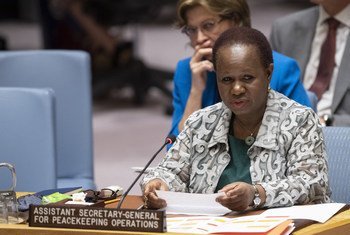
Haitian authorities must do more to prepare the Caribbean island nation for the planned withdrawal of the country’s UN peacekeeping mission, Bintou Keita, Assistant Secretary-General for Peacekeeping Operations, told the Security Council on Thursday.

UN Photo/Manuel Elias
INTERVIEW: With ‘many good things’ accomplished, it’s still ‘a work in progress’, says UN Assembly President reflecting on his year in office
6 September 2018
Peace and Security
Last May, the United Nations General Assembly elected Miroslav Lajčák, the Foreign Minister of Slovakia, President of its 72nd annual session, and he formally took up the job on 12 September.

UNDP/Michael Atwood
Caribbean hurricane season ‘will be different this time’
6 September 2018
Climate Change
In September 2017 two category five hurricanes swept across the Caribbean, devastating island communities in the region. In the 2nd part of this special report marking the one year anniversary of hurricanes Irma and Maria hitting the Caribbean, UN News looks at how the UN has responded, helping communities to get back on their feet, and preparing them for the inevitability of more damaging hurricanes in the future.

Inter-Korean Summit Press Corps
UN chief ‘looks forward’ to progress on denuclearizing the Korean Peninsula
6 September 2018
Peace and Security
United Nations Secretary-General António Guterres has welcomed the North Korean leader, Kim Jong-un’s commitment on Wednesday, to continue working towards the denuclearization of the Korean Peninsula.
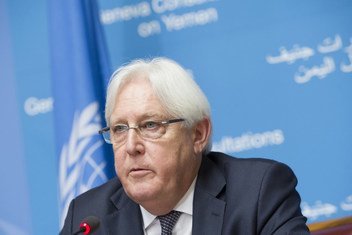
UN Geneva/Violaine Martin
UN Envoy working to ‘overcome obstacles’ barring resumption of Yemen peace talks
6 September 2018
Peace and Security
The United Nations Special Envoy for Yemen met Government representatives on Thursday at the start of what were due to be the first peace talks involving both warring parties to be held in two years, vowing to “overcome obstacles” which have so far prevented the Houthi rebel delegation from showing up.
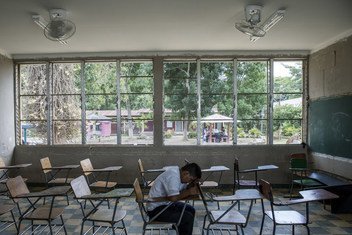
UNICEF/Adriana Zehbrauskas
Violence at school an ‘unforgettable lesson’ faced by more than half the world’s children: UNICEF
6 September 2018
Culture and Education
Around 150 million school children aged 13-15 are the victims of violence from their peers, says a new report from the UN Children’s Fund, UNICEF.

UN Photo/Eric Kanalstein
Verdict against South Sudan soldiers ‘finally delivers justice’ – UN Mission
6 September 2018
Human Rights
The United Nations Mission in South Sudan (UNMISS) has applauded the verdict by a military court on Thursday, that found ten government soldiers guilty of murder, rape and other crimes against civilians and journalists at a hotel in the capital Juba, just over two years ago.
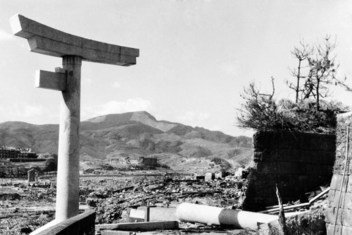
UN Photo/Shigeo Hayashi
‘Legally binding’ nuclear-test ban essential to prevent ‘catastrophic impact’ says UN chief
6 September 2018
Peace and Security
On the annual observance of the International Day Against Nuclear Tests, Secretary-General António Guterres has highlighted the “inextricable connection” between testing and eliminating nuclear weapons across the world.

ILO
UN hails ‘ground-breaking’ Supreme Court ruling to decriminalize gay sex in India
6 September 2018
Human Rights
A landmark ruling in India that decriminalizes gay sex has been welcomed as a “ground-breaking decision” by the UN agency leading the fight against HIV/AIDS.
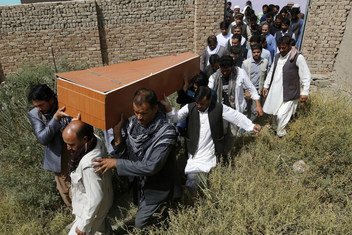
UNAMA/Fardin Waezi
UN condemns deadly twin bombings in Kabul, killing first-responders, sportsmen, journalists
6 September 2018
Peace and Security
The United Nations Assistance Mission in Afghanistan (UNAMA) condemned an attack on a Kabul sports centre on Wednesday, which killed at least 22 people, including first-responders, sportsmen, and two journalists who were covering the initial bombing for a local news agency. Around 75 others were wounded.

UN Photo/Eskinder Debebe
Runaway climate change still 'a real possibility': UN Secretary-General
5 September 2018
Climate Change
Greater ambition, urgency and action are needed if we are to prevent ever greater climate-related crises, said UN Chief Antonió Guterres on Wednesday, at the launch of the 2018 New Climate Economyreport, at UN Headquarters in New York

Libya has ‘lurched from one emergency to another,’ high-level UN official tells Security Council
5 September 2018
Peace and Security
The status quo in Libya is “untenable,” Ghassan Salamé, Head of the United Nations Support Mission in Libya (UNSMIL) told the Security Council on Wednesday.

UN Photo/Evan Schneider
Peace must be built ‘block after block’ UN General Assembly President tells key forum
5 September 2018
Peace and Security
Under the theme of charting “A Credible Pathway to Sustaining Peace,” Miroslav Lajčák, President of the 72nd General Assembly, convened this year’s one-day High-level Forum for Member States and others on Wednesday, to further promote a global culture of peace.

UN Photo/Marie Frechon
Albinism: UN official welcomes latest developments in ‘landmark’ Malawi murder case
5 September 2018
Law and Crime Prevention
The top United Nations representative in Malawi is urging the Government to promptly prosecute those allegedly responsible for the death of a young man with albinism whose butchered body was found earlier this year.

UN News/Shymaa El-Ansary
UN media seminar on peace in the Middle East, highlights ‘power of words over weapons’
5 September 2018
Peace and Security
Engaging in debate over how best to advance peace in the Middle East and resolving the Israeli-Palestinian conflict is “a welcome reminder of the power of words over weapons,” said United Nations chief António Guterres on Wednesday.

UN OCHA/Giles Clarke
Major UN push for peace to end Yemen’s ‘hot war’ begins in Geneva
5 September 2018
Peace and Security
Efforts are under way to bring a “flickering signal of hope” to war-weary civilians in Yemen with UN-organised consultations between the Government and the Houthi opposition in Geneva set to begin, the UN’s Special Envoy Martin Griffiths, said on Wednesday.

Artículo 66
Security Council takes up Nicaragua crisis, with some reservations
5 September 2018
Peace and Security
Political turmoil in Nicaragua could pose a threat to the security of countries across Central America, the UN Security Council heard on Wednesday.

UNDP/Zaimis Olmos
In the eye of the Caribbean storm: one year on from Irma and Maria
5 September 2018
Climate Change
“It was angry. That's what it sounded like to me. When the roof came off, there were these horrible screeches, this horrible noise. It was devastating, and we all had to run”.

UN/Jean-Marc Ferré
Burundi: ‘They’re hiding the bodies’ after summary executions, say UN investigators
5 September 2018
Human Rights
Serious rights violations are continuing in Burundi, including summary executions and hate speech at the highest level of government, UN-appointed investigators said on Wednesday.
Audio - 5'35" Playlist

CICIG
Guatemala bars UN anti-corruption investigator from re-entering country
5 September 2018
Human Rights
Guatemalan authorities informed United Nations Secretary-General António Guterres on Tuesday that they have barred Commissioner Ivan Velasquez, of the International Commission against Impunity in Guatemala (CICIG), from re-entering the country.

UN Photo/Mark Garten
UN Chief commends Mauritania for peaceful election process
5 September 2018
Peace and Security
UN Secretary-General António Guterreshas welcomed the “peaceful conduct” of the Mauritanian elections that took place on 1 September.

UNDP/Kairatbek Murzakimov
Inactivity puts physical and mental health of more than 1.4 billion adults at risk, says WHO
5 September 2018
Health
Insufficient physical activity is a leading risk factor for non-communicable disease, negatively impacting mental health and overall quality of life, according to a newly released United Nations health agency study.
Audio - 5'23" Playlist

OCHA/Ivo Brandau
Africa’s Lake Chad Basin: Over $2.1 billion pledged, to provide comprehensive crisis response
4 September 2018
Humanitarian Aid
A United Nations-backed humanitarian conference to raise much needed resources for relief, development and peacebuilding programmes in Africa’s Lake Chad Basin concluded on Tuesday, raising some $2.17 billion in support and about $467 million in concessional loans for the crisis-ridden region.

Italian Coastguard/Massimo Sestini
Major increase in Europe’s refugee and migrant death rate: UNHCR
4 September 2018
Migrants and Refugees
The number of refugees and migrants reaching the European continent is going down, but the rate of fatalities has gone up dramatically, according to a new reportfrom the UN refugee agency, UNHCR

WFP/Hussam Al Saleh
It’s time to apply maximum ‘moral pressure’ to save lives in Syria’s Idlib: UN negotiator
4 September 2018
Peace and Security
All countries with influence over the grinding conflict in Syria should use all the “moral pressure” they can to avoid a full-scale military attack on Idlib, particularly Russia and Turkey, the United Nations top negotiator Staffan de Mistura said on Tuesday.

UNMISS\Nektarios Markogiannis
New home for scores of South Sudan's displaced
4 September 2018
Peace and Security
Nearly 3,500 people displaced by violence in South Sudan have been relocated from a UN-run camp in the capital, Juba, to temporary housing, the organization’s mission in the country, UNMISS, reported on Tuesday.
WHO/Marcelo Moreno
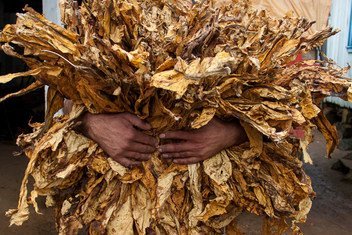
Tobacco control, a ‘major component’ of environmental protection efforts – UN health official
4 September 2018
Health
From deforestation to soil degradation and pollution, tobacco production and its use by consumers, is “tremendously destructive” for the environment, although control measures can help curb its negative environmental effects, including the damaging impact of climate change, the head of the UN tobacco control treaty watchdog – formally known as the Secretariat of the WHO FCTC - has told UN News.

UNHCR/Tarik Argaz
Ceasefire agreement reached in Libyan capital, announces UN mission
4 September 2018
Peace and Security
An agreement on a ceasefire in Tripoli has been reached under the auspices of Ghassan Salame, the top United Nations official in Libya, the Organization’s Support Mission in the country, UNSMIL, has announced.

Simone D. McCourtie / World Bank
With AI, jobs are changing but no mass unemployment expected – UN labour experts
4 September 2018
Economic Development
The rise of frontier technologies like Artificial Intelligence has caused fears of robots taking over blue-collar jobs, but a United Nations expert says humans still have the upper hand given their creativity and ability to form relationships.

IOM Iraq/Sarah Ali Abed
Iraq milestone: Some four million people return home, displacement drops to four-year low
4 September 2018
Peace and Security
For the first time in nearly four years, the number of displaced Iraqis has fallen below two million, according to a new report released on Tuesday by the United Nations migration agency.

Guy Oliver/IRIN
UNHCR calls for action against xenophobic attacks in South Africa
4 September 2018
Migrants and Refugees
Authorities in South Africa are being urged by the UN refugee agency, UNHCR, to act in the wake of recent violence against foreigners in the country, some of which has been deadly.
IOM/Jessica Mamo
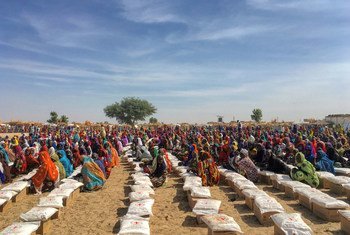
Progress made but Lake Chad crisis is not over, says UN relief chief, urging greater support for region
3 September 2018
Humanitarian Aid
Despite improvements in the humanitarian situation in the Lake Chad region, millions continue to remain dependent on lifesaving assistance, the top United Nations relief official said on Monday, urging greater international support for the region to safeguard the progress achieved.

UN China/Zhao Yun
In Beijing, UN chief urges win-win collaboration between China and Africa for ‘the future we want’
3 September 2018
SDGs
Highlighting the economic and development progress made in China and Africa, United Nations Secretary-General António Guterres urged them to unite their combined potential for peaceful, sustainable and equitable progress to the benefit of all humankind.
ILO/M. Creuset
Journalists’ conviction in Myanmar a message that press ‘cannot operate fearlessly’ – UN rights chief
3 September 2018
Human Rights
Stressing that the legal process that led to the conviction of two Reuters journalists in Myanmar “clearly breached” international standards, the United Nations top human rights official called for their immediate and unconditional release.

UN Photo/Eskinder Debebe
UN chief calls for calm as violence erupts in Libyan capital
2 September 2018
Peace and Security
Condemning the escalation of violence in and around the Libyan capital, Tripoli, United Nations Secretary-General António Guterres has called on all parties to immediately cease hostilities and grant humanitarian relief to those in need.
UN Photo/Violaine Martin (file)
Mauritania: UN chief urges peaceful, credible elections
1 September 2018
Peace and Security
United Nations Secretary-General António Guterres has called on all parties in Mauritania to ensure peaceful and credible elections as the country holds legislative, regional and municipal polls on Saturday.

UNRWA/Tamer Hamam
UN urges countries to step up assistance for Palestine refugees
1 September 2018
Humanitarian Aid
The United Nations said it regrets the decision of the United States to stop funding to the UN Relief and Works Agency for Palestine Refugees in the Near East (UNRWA) and called on other countries to help fill the remaining financial gap.PEACE VIGIL: UN Headlines September 1-30, 2018 from UN News Cen...: LATEST NEWS UN Photo/Manuel Elias Madagascar: UN Secretary-General reaffirms support for electoral process 9 September 2018 Peace and Sec...
Subscribe to:
Posts (Atom)