Sunday, September 9, 2018

PEACE VIGIL: UN Headlines September 1-30, 2018 from UN News Cen...


LATEST NEWS

UN Photo/Manuel Elias

Madagascar: UN Secretary-General reaffirms support for electoral process
9 September 2018
Peace and Security


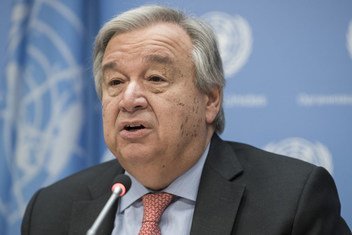
The Secretary-General of the United Nations, António Guterres, has welcomed the appointment on 7 September of Rivo Rakotovao, President of the Madagascar Senate, as acting president of the country.

UN Photo/Mark Garten

Horn of Africa: UN chief welcomes Djibouti agreement between Eritrea, Ethiopia and Somalia
8 September 2018
Peace and Security


UN Secretary-General António Guterres has welcomed Thursday's meeting in Djibouti with the foreign ministers of Eritrea, Ethiopia and Somalia with the Djiboutian head of diplomacy.


UNICEF/Alessio Romenzi

Human traffickers in Libya are posing as UN staff, says Refugee Agency
8 September 2018
Peace and Security


The UN Refugee Agency, UNHCR, has called on Libyan authorities to take action against criminals targeting desperate refugees and migrants, amid reports that smugglers and traffickers in the country are impersonating Agency staff.


UN Photo/Manuel Elias

Yemen consultations have started, insists top UN negotiator
8 September 2018
Peace and Security


A positive environment exists for building trust between the opposing parties involved in discussions for a political solution to the Yemen conflict, despite the absence of one of the delegations in Geneva and insecurity on the ground, UN Special Envoy Martin Griffiths said on Saturday.


FAO/Luis Tato

Backed by UN agency, countries set to take on deadly livestock-killing disease
7 September 2018
Health


Gathered at a major United Nations agricultural conference, over 45 countries today pledged to eradicate by 2030 a highly contagious and devastating disease responsible for the death of millions of small farm animals, at cost of more than $2 billion each year.


Photo: UPU

144 years on, Universal Postal Union meets to define its 21st Century role
7 September 2018
UN Affairs


The Universal Postal Union (UPU), one of the world’s oldest international organizations, has met in the Ethiopian capital Addis Ababa to improve its working practices and define its role in the modern world.


MINUSCA Photo

UN police investigating killing of displaced people in Central African Republic
7 September 2018
Peace and Security


Perpetrators behind the killing of a number of people displaced by conflict in the Central African Republic (CAR) must be brought to justice, the UN peacekeeping operation in the country said on Friday.
Audio - 3'33" Playlist 
UN Photo/Loey Felipe

Halt ‘imminent’ executions of Kurdish prisoners, UN experts urge Iran
7 September 2018
Human Rights


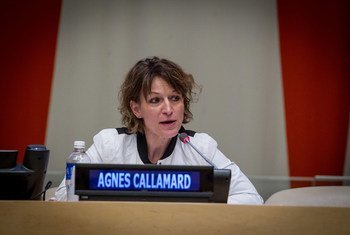
Two independent United Nations human rights experts have called on the Iranian Government to halt the execution of three prisoners from the Kurdish community, amid concerns that they did not receive a fair trial and allegations that they were tortured while in detention.


UNICEF/UNI150195/Diffidenti

‘Sanctity of human civilian life’ in Idlib must win out, urges UN Syria Envoy
7 September 2018
Peace and Security


With the ingredients for a “perfect storm” brewing in the Syrian province of Idlib, the international community cannot allow civilians there to succumb to such a fate, the UN Envoy for the country told the Security Council on Friday.

UNMISS/Isaac Billy

‘Children’s crisis’ in South Sudan must be addressed, says top UN official calling for real accountability
7 September 2018
Human Rights


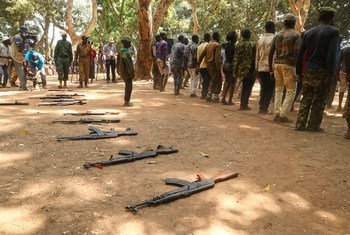
Virginia Gamba, the United Nations Special Representative for Children and Armed Conflict, on Friday called for much greater accountability and effort, to prevent grave violations against children across the world’s youngest nation, South Sudan.
UNICEF

WFP and UNICEF prepare for the worst in Syria’s Idlib, as insecurity mars start of another school year
7 September 2018
Peace and Security


Emergency food supplies for hundreds of thousands of people in Syria’s Idlib are “ready for distribution” in the event of mass displacement caused by a full-scale military offensive on the last opposition-held region, the World Food Programme (WFP) said on Friday.


UN Photo/Eskinder Debebe

Security Council must work towards ‘common approach’ as investigations continue into alleged Syria chemical attack
6 September 2018
Peace and Security


Experts continue to gather information related to an alleged chemical weapons attack in Douma, Syria, earlier this year, the UN’s nuclear disarmament chief told the Security Council on Thursday.


UN Photo/Loey Felipe

Russian operatives carried out Salisbury chemical attack alleges UK; accusations part of ‘post-truth world’ asserts Moscow
6 September 2018
Peace and Security


The United Kingdom and Russia traded a volley of words at the United Nations Security Council on Thursday, with the former laying out information which, it alleges, clearly places two Russian military intelligence operatives behind the deadly nerve-agent attack in the English city of Salisbury on 4 March.

UN Photo/Eskinder Debebe

Haiti’s security situation remains ‘fragile’: UN representative
6 September 2018
Peace and Security


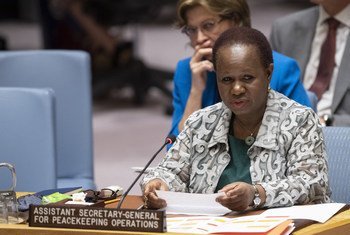
Haitian authorities must do more to prepare the Caribbean island nation for the planned withdrawal of the country’s UN peacekeeping mission, Bintou Keita, Assistant Secretary-General for Peacekeeping Operations, told the Security Council on Thursday.


UN Photo/Manuel Elias

INTERVIEW: With ‘many good things’ accomplished, it’s still ‘a work in progress’, says UN Assembly President reflecting on his year in office
6 September 2018
Peace and Security


Last May, the United Nations General Assembly elected Miroslav Lajčák, the Foreign Minister of Slovakia, President of its 72nd annual session, and he formally took up the job on 12 September.


UNDP/Michael Atwood

Caribbean hurricane season ‘will be different this time’
6 September 2018
Climate Change


In September 2017 two category five hurricanes swept across the Caribbean, devastating island communities in the region. In the 2nd part of this special report marking the one year anniversary of hurricanes Irma and Maria hitting the Caribbean, UN News looks at how the UN has responded, helping communities to get back on their feet, and preparing them for the inevitability of more damaging hurricanes in the future.


Inter-Korean Summit Press Corps

UN chief ‘looks forward’ to progress on denuclearizing the Korean Peninsula
6 September 2018
Peace and Security


United Nations Secretary-General António Guterres has welcomed the North Korean leader, Kim Jong-un’s commitment on Wednesday, to continue working towards the denuclearization of the Korean Peninsula.

UN Geneva/Violaine Martin

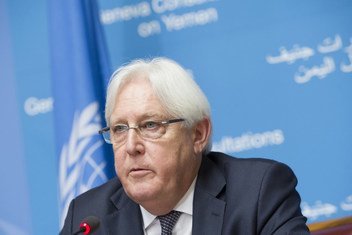
UN Envoy working to ‘overcome obstacles’ barring resumption of Yemen peace talks
6 September 2018
Peace and Security


The United Nations Special Envoy for Yemen met Government representatives on Thursday at the start of what were due to be the first peace talks involving both warring parties to be held in two years, vowing to “overcome obstacles” which have so far prevented the Houthi rebel delegation from showing up.

UNICEF/Adriana Zehbrauskas

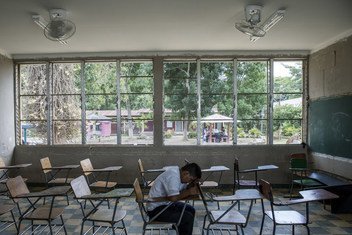
Violence at school an ‘unforgettable lesson’ faced by more than half the world’s children: UNICEF
6 September 2018
Culture and Education


Around 150 million school children aged 13-15 are the victims of violence from their peers, says a new report from the UN Children’s Fund, UNICEF.


UN Photo/Eric Kanalstein

Verdict against South Sudan soldiers ‘finally delivers justice’ – UN Mission
6 September 2018
Human Rights


The United Nations Mission in South Sudan (UNMISS) has applauded the verdict by a military court on Thursday, that found ten government soldiers guilty of murder, rape and other crimes against civilians and journalists at a hotel in the capital Juba, just over two years ago.
UN Photo/Shigeo Hayashi

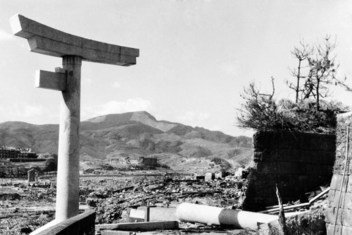
‘Legally binding’ nuclear-test ban essential to prevent ‘catastrophic impact’ says UN chief
6 September 2018
Peace and Security


On the annual observance of the International Day Against Nuclear Tests, Secretary-General António Guterres has highlighted the “inextricable connection” between testing and eliminating nuclear weapons across the world.


ILO

UN hails ‘ground-breaking’ Supreme Court ruling to decriminalize gay sex in India
6 September 2018
Human Rights


A landmark ruling in India that decriminalizes gay sex has been welcomed as a “ground-breaking decision” by the UN agency leading the fight against HIV/AIDS.

UNAMA/Fardin Waezi

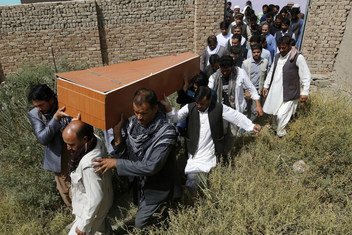
UN condemns deadly twin bombings in Kabul, killing first-responders, sportsmen, journalists
6 September 2018
Peace and Security


The United Nations Assistance Mission in Afghanistan (UNAMA) condemned an attack on a Kabul sports centre on Wednesday, which killed at least 22 people, including first-responders, sportsmen, and two journalists who were covering the initial bombing for a local news agency. Around 75 others were wounded.


UN Photo/Eskinder Debebe

Runaway climate change still 'a real possibility': UN Secretary-General
5 September 2018
Climate Change


Greater ambition, urgency and action are needed if we are to prevent ever greater climate-related crises, said UN Chief Antonió Guterres on Wednesday, at the launch of the 2018 New Climate Economyreport, at UN Headquarters in New York


Libya has ‘lurched from one emergency to another,’ high-level UN official tells Security Council
5 September 2018
Peace and Security


The status quo in Libya is “untenable,” Ghassan Salamé, Head of the United Nations Support Mission in Libya (UNSMIL) told the Security Council on Wednesday.


UN Photo/Evan Schneider

Peace must be built ‘block after block’ UN General Assembly President tells key forum
5 September 2018
Peace and Security


Under the theme of charting “A Credible Pathway to Sustaining Peace,” Miroslav Lajčák, President of the 72nd General Assembly, convened this year’s one-day High-level Forum for Member States and others on Wednesday, to further promote a global culture of peace.


UN Photo/Marie Frechon

Albinism: UN official welcomes latest developments in ‘landmark’ Malawi murder case
5 September 2018
Law and Crime Prevention


The top United Nations representative in Malawi is urging the Government to promptly prosecute those allegedly responsible for the death of a young man with albinism whose butchered body was found earlier this year.


UN News/Shymaa El-Ansary

UN media seminar on peace in the Middle East, highlights ‘power of words over weapons’
5 September 2018
Peace and Security


Engaging in debate over how best to advance peace in the Middle East and resolving the Israeli-Palestinian conflict is “a welcome reminder of the power of words over weapons,” said United Nations chief António Guterres on Wednesday.


UN OCHA/Giles Clarke

Major UN push for peace to end Yemen’s ‘hot war’ begins in Geneva
5 September 2018
Peace and Security


Efforts are under way to bring a “flickering signal of hope” to war-weary civilians in Yemen with UN-organised consultations between the Government and the Houthi opposition in Geneva set to begin, the UN’s Special Envoy Martin Griffiths, said on Wednesday.


Artículo 66

Security Council takes up Nicaragua crisis, with some reservations
5 September 2018
Peace and Security


Political turmoil in Nicaragua could pose a threat to the security of countries across Central America, the UN Security Council heard on Wednesday.
UNDP/Zaimis Olmos

In the eye of the Caribbean storm: one year on from Irma and Maria
5 September 2018
Climate Change


“It was angry. That's what it sounded like to me. When the roof came off, there were these horrible screeches, this horrible noise. It was devastating, and we all had to run”.


UN/Jean-Marc Ferré

Burundi: ‘They’re hiding the bodies’ after summary executions, say UN investigators
5 September 2018
Human Rights


Serious rights violations are continuing in Burundi, including summary executions and hate speech at the highest level of government, UN-appointed investigators said on Wednesday.
Audio - 5'35" Playlist 

CICIG

Guatemala bars UN anti-corruption investigator from re-entering country
5 September 2018
Human Rights


Guatemalan authorities informed United Nations Secretary-General António Guterres on Tuesday that they have barred Commissioner Ivan Velasquez, of the International Commission against Impunity in Guatemala (CICIG), from re-entering the country.


UN Photo/Mark Garten

UN Chief commends Mauritania for peaceful election process
5 September 2018
Peace and Security


UN Secretary-General António Guterreshas welcomed the “peaceful conduct” of the Mauritanian elections that took place on 1 September.


UNDP/Kairatbek Murzakimov

Inactivity puts physical and mental health of more than 1.4 billion adults at risk, says WHO
5 September 2018
Health


Insufficient physical activity is a leading risk factor for non-communicable disease, negatively impacting mental health and overall quality of life, according to a newly released United Nations health agency study.
Audio - 5'23" Playlist 


OCHA/Ivo Brandau

Africa’s Lake Chad Basin: Over $2.1 billion pledged, to provide comprehensive crisis response
4 September 2018
Humanitarian Aid


A United Nations-backed humanitarian conference to raise much needed resources for relief, development and peacebuilding programmes in Africa’s Lake Chad Basin concluded on Tuesday, raising some $2.17 billion in support and about $467 million in concessional loans for the crisis-ridden region.


Italian Coastguard/Massimo Sestini

Major increase in Europe’s refugee and migrant death rate: UNHCR
4 September 2018
Migrants and Refugees


The number of refugees and migrants reaching the European continent is going down, but the rate of fatalities has gone up dramatically, according to a new reportfrom the UN refugee agency, UNHCR


WFP/Hussam Al Saleh

It’s time to apply maximum ‘moral pressure’ to save lives in Syria’s Idlib: UN negotiator
4 September 2018
Peace and Security


All countries with influence over the grinding conflict in Syria should use all the “moral pressure” they can to avoid a full-scale military attack on Idlib, particularly Russia and Turkey, the United Nations top negotiator Staffan de Mistura said on Tuesday.


UNMISS\Nektarios Markogiannis

New home for scores of South Sudan's displaced
4 September 2018
Peace and Security


Nearly 3,500 people displaced by violence in South Sudan have been relocated from a UN-run camp in the capital, Juba, to temporary housing, the organization’s mission in the country, UNMISS, reported on Tuesday.
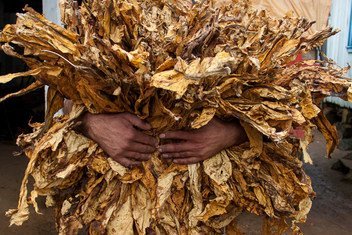

WHO/Marcelo Moreno

Tobacco control, a ‘major component’ of environmental protection efforts – UN health official
4 September 2018
Health


From deforestation to soil degradation and pollution, tobacco production and its use by consumers, is “tremendously destructive” for the environment, although control measures can help curb its negative environmental effects, including the damaging impact of climate change, the head of the UN tobacco control treaty watchdog – formally known as the Secretariat of the WHO FCTC - has told UN News.
UNHCR/Tarik Argaz

Ceasefire agreement reached in Libyan capital, announces UN mission
4 September 2018
Peace and Security


An agreement on a ceasefire in Tripoli has been reached under the auspices of Ghassan Salame, the top United Nations official in Libya, the Organization’s Support Mission in the country, UNSMIL, has announced.


Simone D. McCourtie / World Bank

With AI, jobs are changing but no mass unemployment expected – UN labour experts
4 September 2018
Economic Development


The rise of frontier technologies like Artificial Intelligence has caused fears of robots taking over blue-collar jobs, but a United Nations expert says humans still have the upper hand given their creativity and ability to form relationships.


IOM Iraq/Sarah Ali Abed

Iraq milestone: Some four million people return home, displacement drops to four-year low
4 September 2018
Peace and Security


For the first time in nearly four years, the number of displaced Iraqis has fallen below two million, according to a new report released on Tuesday by the United Nations migration agency.


Guy Oliver/IRIN

UNHCR calls for action against xenophobic attacks in South Africa
4 September 2018
Migrants and Refugees


Authorities in South Africa are being urged by the UN refugee agency, UNHCR, to act in the wake of recent violence against foreigners in the country, some of which has been deadly.
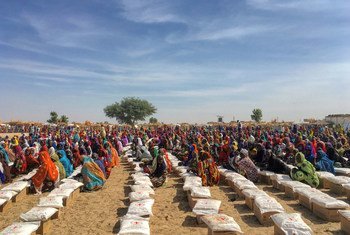

IOM/Jessica Mamo

Progress made but Lake Chad crisis is not over, says UN relief chief, urging greater support for region
3 September 2018
Humanitarian Aid


Despite improvements in the humanitarian situation in the Lake Chad region, millions continue to remain dependent on lifesaving assistance, the top United Nations relief official said on Monday, urging greater international support for the region to safeguard the progress achieved.


UN China/Zhao Yun

In Beijing, UN chief urges win-win collaboration between China and Africa for ‘the future we want’
3 September 2018
SDGs


Highlighting the economic and development progress made in China and Africa, United Nations Secretary-General António Guterres urged them to unite their combined potential for peaceful, sustainable and equitable progress to the benefit of all humankind.

ILO/M. Creuset

Journalists’ conviction in Myanmar a message that press ‘cannot operate fearlessly’ – UN rights chief
3 September 2018
Human Rights


Stressing that the legal process that led to the conviction of two Reuters journalists in Myanmar “clearly breached” international standards, the United Nations top human rights official called for their immediate and unconditional release.


UN Photo/Eskinder Debebe

UN chief calls for calm as violence erupts in Libyan capital
2 September 2018
Peace and Security


Condemning the escalation of violence in and around the Libyan capital, Tripoli, United Nations Secretary-General António Guterres has called on all parties to immediately cease hostilities and grant humanitarian relief to those in need.

UN Photo/Violaine Martin (file)

Mauritania: UN chief urges peaceful, credible elections
1 September 2018
Peace and Security


United Nations Secretary-General António Guterres has called on all parties in Mauritania to ensure peaceful and credible elections as the country holds legislative, regional and municipal polls on Saturday.


UNRWA/Tamer Hamam

UN urges countries to step up assistance for Palestine refugees
1 September 2018
Humanitarian Aid


The United Nations said it regrets the decision of the United States to stop funding to the UN Relief and Works Agency for Palestine Refugees in the Near East (UNRWA) and called on other countries to help fill the remaining financial gap.PEACE VIGIL: UN Headlines September 1-30, 2018 from UN News Cen...: LATEST NEWS UN Photo/Manuel Elias Madagascar: UN Secretary-General reaffirms support for electoral process 9 September 2018 Peace and Sec...

Thursday, September 6, 2018

Wellness Pilipinas International: WHO new global action plan to help countries scale...


Regular physical activity is proven to help prevent and treat noncommunicable diseases (NCDs) such as heart disease, stroke, diabetes and breast and colon cancer. It also helps prevent hypertension, overweight and obesity and can improve mental health, quality of life and well-being. Yet, much of the world is becoming less active.


WHO has developed a new global action plan to help countries scale up policy actions to promote physical activity. It responds to the requests by countries for updated guidance, and a framework of effective and feasible policy actions to increase physical activity at all levels.


The plan sets out four objectives and recommends 20 policy actions that are applicable to all countries and address the cultural, environmental and individual determinants of inactivity.


A key feature of this new plan is its call for a ‘’systems-based’’ approach where effective implementation will require bold leadership combined with cross-government and multisectoral partnerships at all levels to achieve a coordinated, whole-of-system response.


Working in partnerships, WHO will support countries to implement a whole-of-community approach to increase levels of physical activity in people of all ages and abilities. Global, regional and national coordination and capacity will be strengthened to respond to needs for technical support, innovation and guidance.


The global action plan on physical activity 2018 - 2030


The goal: To reduce physical inactivity


How


The plan sets out four objectives and recommends 20 policy actions. The four objectives are:


1

Create an active society – social norms and attitudes


Create a paradigm shift in all of society by enhancing knowledge and understanding of, and appreciation for, the multiple benefits of regular physical activity, according to ability and at all ages.


2

Create active environments – spaces and places


Create and maintain environments that promote and safeguard the rights of all people, of all ages, to have equitable access to safe places and spaces, in their cities and communities, in which to engage in regular physical activity, according to ability.


3

Create active people – programmes and opportunities
Create and promote access to opportunities and programmes, across multiple settings, to help people of all ages and abilities to engage in regular physical activity as individuals, families and communities.


4

Create active systems – governance and policy enablers
Create and strengthen leadership, governance, multisectoral partnerships, workforce capabilities, advocacy and information systems across sectors, to achieve excellence in resource mobilization and implementation of coordinated international, national and subnational action to increase physical activity and reduce sedentary behaviour.


The global action plan proposes solutions to strengthen leadership, governance, workforce capabilities, and advocacy. It recognises the need for stronger global, regional and national coordination and the need for a social movement and paradigm shift to address the complex problem of physical inactivity.


Promoting physical activity requires collaboration with all sectors; private companies, NGOs, community organisations, and individuals must work together to engage in local solutions. Solutions at national, sub-national and city levels are detailed in the above figure, which shows the interrelated nature of a comprehensive response to inactivity.


Policy responses must be selected and implemented according to national priorities and context, and take into account a diverse range of capabilities. WHO will work with partners to identify and implement early wins, share best practices within and between countries, and drive strategic partnerships across sectors.


Document download
http://www.who.int/ncds/prevention/physical-activity/gappa/action-plan


Wellness Pilipinas International: WHO new global action plan to help countries scale...: Regular physical activity is proven to help prevent and treat noncommunicable diseases (NCDs) such as heart disease, stroke, diabetes and b...

Wellness Pilipinas International: Noncommunicable diseases and their risk factors: 1...

5 SEPTEMBER 2018 - New data published in The Lancet Global Health today show that more than one in four adults globally (28% or 1.4 billion people) are physically inactive. However this can be as high as one in three adults inactive in some counties.


The paper, authored by four World Health Organization experts, reports data that update 2008 estimates on levels of activity and, for the first time, reports trend analyses showing that overall, the global level of inactivity in adults remains largely unchanged since 2001.


Women were less active than men, with an over 8% difference at the global level (32% men vs 23%, women). High income countries are more inactive (37%) compared with middle income (26%) and low income countries (16%).


These data show the need for all countries to increase the priority given to national and sub-national actions to provide the environments that support physical activity and increase the opportunities for people of all ages and abilities, to be active every day.


The new Global Action Plan on Physical Activity sets the target to reduce physical inactivity by 10% by 2025 and 15% by 2030.


Regular physical inactivity increases peoples risk of poor health, including cardiovascular disease, several types of cancer and diabetes, falls, as well as mental health conditions. Publication of levels of participation in children and young people are forthcoming.Wellness Pilipinas International: Noncommunicable diseases and their risk factors: 1...: 5 SEPTEMBER 2018 - New data published in The Lancet Global Health today show that more than one in four adults globally (28% or 1.4 billion...

Monday, August 13, 2018

India and the UN: Celebrating 70 years of invaluable service to the cause of peace

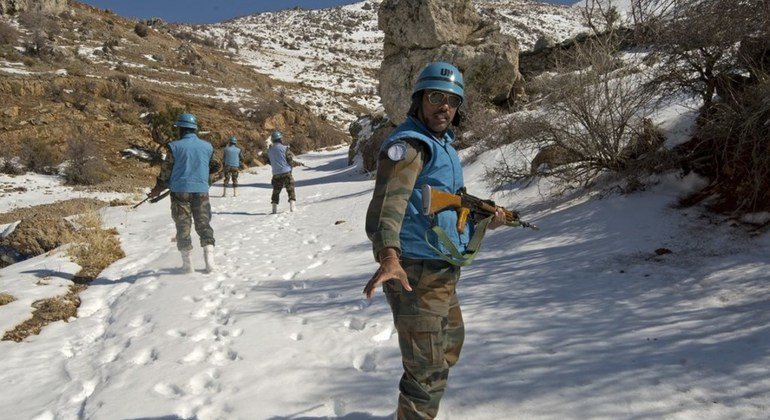
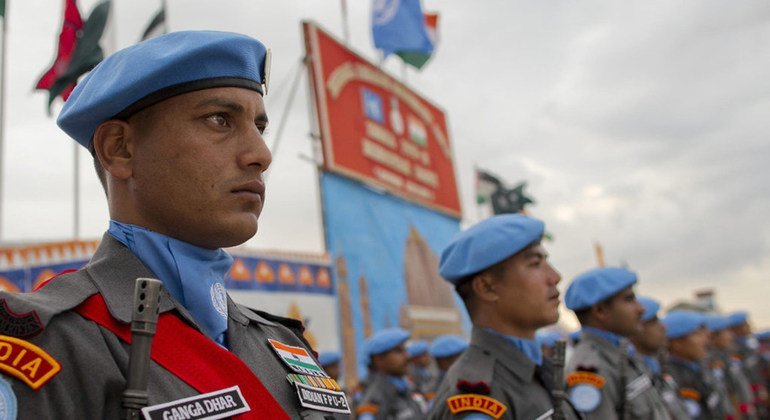
From protecting civilians, disarming ex-combatants and helping countries transition from conflict to peace, Indian men and women in uniform have served the cause of peace from the earliest years of United Nations peacekeeping and continue to do so in some of the most challenging missions.


“UN peacekeeping operates in increasingly complex environments and we are grateful for steadfast partners like India, who have risen to new challenges and continue to participate meaningfully in our efforts to protect vulnerable civilians,” the Under-Secretary-General for Peacekeeping Operations, Jean-Pierre Lacroix, said in a recent interview with UN News.

Mr. Lacroix visited India in June as part of a wider trip to the sub-region during which he thanked the Government and people of India, as well as Bangladesh, Nepal and Pakistan, for their service and sacrifice in the name of peace. Together, troops and police from the four countries currently make up close to one-third of some 91,000 uniformed personnel across 14 UN peacekeeping operations.


UN peacekeeping operates in increasingly complex environments and we are grateful for steadfast partners like India - UN Peacekeeping chief Lacroix

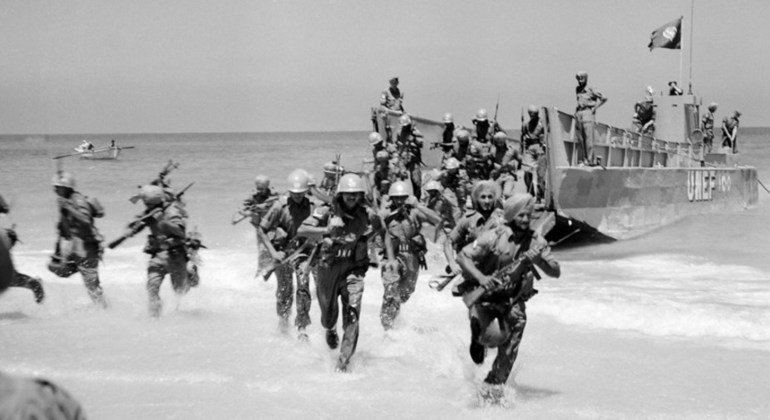
Commencing with its participation in the UN operation in Korea in 1950, India has a long and distinguished history of service in UN peacekeeping, having contributed more personnel than any other country, as well as the first-ever all-female force that helped to bring peace to Liberia in the wake of that country’s brutal civil war.

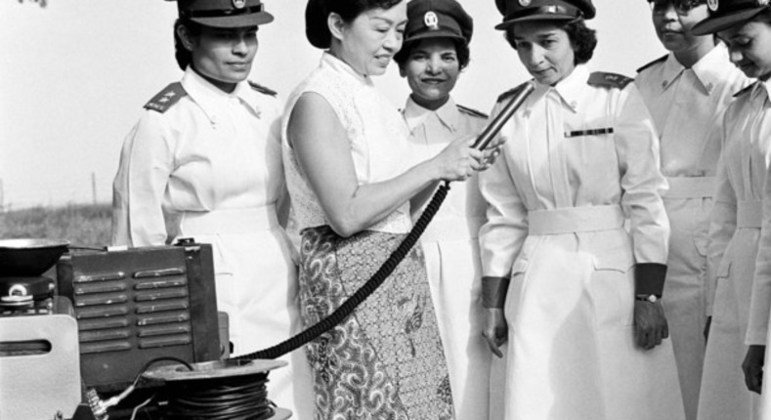
From 2007-2016, there were nine rotations of all-female police units from India, whose primary responsibilities were to provide 24-hour guard duty, public order management and conduct night patrols in and around the capital, Monrovia, while assisting to build the capacity of local security institutions.

Hailed as role models, these female officers not only played a vital role in restoring security in the West African nation but also contributed to an increase in the number of women in the country’s security sector.

“The contribution you have made to inspiring Liberian women, to imparting in them the spirit of professionalism, to encourage them to join those entities, those operations that protect the nation, for that we will always be grateful,” then President Ellen Johnson Sirleaf stated when the last all-female unit departed Liberia in February 2016.


1 / 11


Serving in DR of Congo
Indian peacekeepers in the Democratic Republic of the Congo secure a helicopter landing site in the far east of the country in 2015.
UN Photo/Michael Ali


Making a lasting impact in the communities in which they serve

In addition to their security role, the members of the female Indian Formed Police Unit also distinguished themselves through humanitarian service, including organizing medical camps for Liberians, many of whom have limited access to health care services.

Medical care is among the many services Indian peacekeepers provide to the communities in which they serve on behalf of the Organization. They also perform specialized tasks such as veterinary support and engineering services.

Indian veterinarians serving with the UN Mission in South Sudan (UNMISS), for example, stepped up to help cattle herders who were losing much of their stock to malnutrition and disease in the war-torn nation.

In South Sudan, cattle are not only a valuable source of food but also a commodity for bartering.

The Indian veterinarians ran a mobile clinic earlier this year, travelling across the Upper Nile region, including to remote and dangerous locations, to treat sick cattle and educate their owners about disease prevention.

“Wherever I went I was being welcomed by people. They were very happy because there was no one, no one to look after them and whatever little we could contribute as a veterinarian and part of UNMISS, it is beneficial for them and for the animals,” said Indian peacekeeper and veterinarian Prashant Tripathi.

The Indian contingent in the Upper Nile region includes the Indian Battalion, the Horizontal Mechanical Engineering Company, the Level II hospital, the Petroleum Platoon and the Force Signal Unit. They have all received UN medals of honour for their dedication and service in peacekeeping.

The Indian contingent in South Sudan has gone the extra mile by providing vocational training and life-saving medical assistance, as well as carrying out significant road repair work.


It is the nature of the Indian Army to step in any time when there is a need when we are on peacekeeping missions - Colonel Gaurav Bhatra, UNMISS batallion chief

Colonel Gaurav Bhatra, who commands the 850-strong Indian battalion, considers such efforts “a normal part of Indian culture.”

“Even in our country, we are sometimes called upon to assist in areas where it is extremely difficult to alleviate the suffering of the people. It is the nature of the Indian Army to step in any time when there is a need when we are on peacekeeping missions.”

More than 200,000 Indians have served in 49 of the 71 peacekeeping missions established around the world since 1948. Currently, there are around 6,700 uniformed peacekeepers from India, the vast majority of them in the Democratic Republic of Congo and in South Sudan.

India has also provided 15 Force Commanders to various missions, and was the first country to contribute to the Trust Fund on sexual exploitation and abuse, which was set up in 2016.

India’s longstanding service has not come without cost; as of 30 June 2018, over 160 Indian peacekeepers have paid the ultimate price while serving with the United Nations.

“India has lost more peacekeepers than any other Member State. We grieve with the families and the people and Government of India for these losses,” noted Under-Secretary-General Lacroix.

“India’s continued commitment to UN peace operations and to global peace and security – even through these difficult periods – is invaluable.”
INDIA
https://news.un.org/en/story/2018/08/1016322

UN humanitarians scale up life-saving aid to over 1 million forcibly displaced by violence in the south-west Ethiopia

To address the urgent needs of more than a million displaced by inter-communal violence in southwestern Ethiopia over the past four months, UN humanitarian agencies and their partners are ramping up their efforts, providing among other things shelter, household items, water and sanitation, and food to the most vulnerable.
“Those who fled described witnessing extreme violence during village raids, including indiscriminate killings, rape, livestock slaughter and houses being burnt to the ground,” said the spokesperson for the UN Refugee Agency (UNHCR), Andrej Mahecic, during a press briefing in Geneva on Friday. “Most report fleeing with nothing but their lives”.
Since late April, inter-communal clashes have flared up in the border zones of Gedeo, in the Oromia Region, and West Guji in the Southern Nations, Nationalities and Peoples’ (SNNPR) Region. The recent violence came on the heels of more than a year-long crippling drought and tensions over dwindling resources.
In June, humanitarian organisations and the Government of Ethiopia issued a joint appeal for this crisis for $118 million, to cover the most critical needs of some 820,000 people, and ensure the protection of those displaced.
According to the UN Office for the Coordination of Humanitarian Affairs (OCHA), to date, the response in Gedeo and West Guji has enabled the provision of safe drinking water and latrines, food, treatment for severe acute malnutrition, emergency shelter and basic health care. The assistance, says OCHA, is currently being scaled up mostly thanks to “diverted resources from life-saving responses to drought, flood and conflict-displacements” elsewhere in the country.  Funding has also been provided by the UN’s Central Emergency Response Fund (CERF).
However, according to UNHCR’s Spokesperson, the situation on the ground remains extremely dire. “Many sleep on the cold ground in public facilities, keeping warm with only the little clothing they have on them. Others live in makeshift shelters that cannot keep out the heavy rains of the season, leaving them at risk of serious health problems such as pneumonia,” explained Mr. Mahecic, who added that “families have been separated and the overcrowded conditions are leading to serious protection risks,” especially for women and children.
On 28 July, traditional leaders from both sides of the conflict convened a peace and reconciliation conference to address the Gedeo-Guji conflict. The event – attended by officials from the Federal government of Ethiopia, the Oromia and SNNP regions, religious leaders and elders – enabled “a consensus to end the ongoing inter-communal violence and return displaced people to their places of origin by 8 August”, said OCHA.https://news.un.org/en/story/2018/08/1016302

Wellness for Peace Education on Climate Change: UN launches guide for countries to improve locatio...

Wellness for Peace Education on Climate Change: UN launches guide for countries to improve locatio...: The UN Statistics Division and the World Bank launched a new guide to help nations worldwide, especially in low- and middle-income countr...


The UN Statistics Division and the World Bank launched  a new guide to help nations worldwide, especially in low- and middle-income countries, better manage data that contains geographical information – known officially as geospatial data.
The guide includes advice on how to collect, access and use geospatial information to develop effective policies, and more accurately support decision-makers in directing aid and development resources; ensuring that the most vulnerable are not left behind. 
“Geospatial information is a critical component of national infrastructure and a blueprint of what happens where, and with proven societal and economic value,” said Stefan Schweinfest, Director of the Statistics Division, which is part of the UN Department of Economic and Social Affairs (DESA).
High-quality, timely geospatial information is often overlooked in policymaking - Anna Wellenstein (World Bank)
“Better understanding and management of digital location-based data and services, and good geospatial information integrated with urban planning and census data, can enable more efficient resource allocation for better service delivery,” he explained.
The guide, titled ‘Integrated Geospatial Information Framework’, makes concrete recommendations on establishing national geospatial information management processes and putting that information to use.
According to the UN Committee of Experts on Global Geospatial Information Management (UN-GGIM), with more reliable geospatial data, policy-makers, international organisations, civil society and others, will have better insights into the distribution of needs and ways to optimize development planning and investments.
“High-quality, timely geospatial information is often overlooked in policymaking, yet is fundamental to achieving inclusive growth and sustainable development,” said Anna Wellenstein, who leads land and geospatial activities at the World Bank.
Currently, all governments hold a considerable amount of geospatial information, including databases on who has access to education; communities most affected by poverty; areas at risk of disasters; as well as mobile data that can keep more people informed about disease outbreaks and weather patterns.
But the information, although critical to improve lives and livelihoods, is often not current, shared, or integrated with other necessary data.
“The Framework will help countries in building capacity for using geospatial technology to enhance informed government decision-making, facilitate private sector development, take practical actions to achieve a digital transformation, and bridge the geospatial-digital divide.”
The UN-GGIM stressed that this guide is also meant to help low- and middle-income countries move toward developing their “e-economies” to provide better social and economic services to citizens. For example, integrated geospatial information management can enable Small Island Developing States (SIDS) to better monitor climate change impacts, plan mitigation, and manage disaster risks.
Representatives from governments and geospatial information experts are attending the Eighth Session of the UN-GGIM in New York from 1 to 3 August to discuss efforts to enhance collaboration, coordination, and coherence in global geospatial information management. In November, high-level stakeholders will meet in Deqing, Zhejiang Province, China, at the UN World Geospatial Information Congress to ensure the widest and fullest use of geospatial information to advance social, economic, and environmental development.

Wellness for Peace Education on Climate Change: Farmers living on the Indian Ocean Comoros archipe...

Farmers living on the Indian Ocean Comoros archipelago are being supported through a UN Development Programme (UNDP) initiative, to adapt to climate change in an effort to ensure they can continue to prosper in one of Africa’s poorest nations

Some 200,000 Comorians rely solely on agriculture to make a living from crops such as ylang-ylang, vanilla and clove; fragrant plants which have led many to name the small island nation, the perfume islands.
But, changes to the climate are upending traditional agricultural practices and threatening the islanders’ livelihoods.
UNDP has partnered with the Government of Comoros to mentor farmers in a new agricultural approach.  https://news.un.org/en/story/2018/08/1016052
For more information  on this story please click here.


Wellness for Peace Education on Climate Change: Farmers living on the Indian Ocean Comoros archipe...: Some 200,000 Comorians rely solely on agriculture to make a living from crops such as ylang-ylang, vanilla and clove; fragrant plants w...

PRAYERS FOR PEACE: PRAY FOR PALESTINE and ISRAEL for “Children should...


Children’s rights continue to be violated in the Gaza Strip, the West Bank and Israel, according to three leading UN officials in the region who called on all parties responsible to take concrete and immediate steps to “allow children to live free of fear and to realize all their rights”.
In a joint statement, the UN Humanitarian Coordinator in the Occupied Palestinian Territory (OPT), Jamie McGoldrick; the Head of the UN Human Rights office (OHCHR) in the OPT, James Heenan; and the Special Representative for the UN Children’s Fund (UNICEF) in the State of Palestine, Genevieve Boutin, said they were “deeply concerned” by continued reports of “children killed or seriously injured, some as young as 11” in Palestinian-administered areas.
They also denounced the fact that “children in Israel are exposed to fear, trauma, and grave injuries”.
“This month alone, seven Palestinian children were killed by live ammunition and shelling from Israel”, they said, adding that “two Israeli girls aged 14 and 15 also reportedly sustained injuries from rockets and mortar shells indiscriminately launched by Palestinian armed groups towards Israel”.
According to figures provided by UN agencies in the region, since the start of demonstrations at the border fence against Israel’s longstanding blockade and deteriorating living conditions in Gaza on 30 March, 26 Palestinian children have been killed.
21 were shot during the demonstrations, and five others were killed by Israeli shelling, or outside the context of demonstrations. In the same period, hundreds more children have been injured by live ammunition.
“A number of these children will suffer lifelong disabilities, including as a result of the amputation of limbs,” the UN officials said. “Thousands are in need of urgent psycho-social assistance, specialised medical care, and support for their rehabilitation.”
The statement stressed that “all over the Occupied Palestinian Territory, but particularly in the Gaza Strip”, children are “robbed of every right.”
“Families cope with four hours of electricity per day in the sweltering heat, clean drinking water is expensive and hard to find. The start of the school year in one month will be very difficult for tens of thousands of families who cannot afford basic school supplies,” said the three UN officials.
In addition, they deplored the “too often cynical use of children in political rhetoric and propaganda on all sides,” citing last week's call by the organisers of the ‘Great March of Return’ for Palestinians to demonstrate under the banner of "the Friday of our Child Martyrs" and the reported exposure of children to violence. “Children should never be the target of violence and must not be put at risk of violence, nor encouraged to participate in violence,” the joint statement read.
“We call on Israel, as well as the Palestinian Authority and the Hamas authorities in Gaza to put children’s rights ahead of any other considerations and to take immediate steps to alleviate their suffering,” said Mr. McGoldrick, Mr. Heenan and Ms. Boutin. “Respecting the rights of children and refraining from instrumentalising their plight should be a priority for all”, they insisted, stressing that the Israeli-Palestinian context is “not an exception”.
On 23 July, the UN High Commissioner for Human Rights, Zeid Ra'ad Al Hussein, briefed the UN’s Committee on the Exercise of the Inalienable Rights of the Palestinian People, on the many human rights violations facing women, children and men living in the OPT.


PRAYERS FOR PEACE: PRAY FOR PALESTINE and ISRAEL for “Children should...: Children’s rights continue to be violated in the Gaza Strip, the West Bank and Israel, according to three leading UN official...

PRAYERS FOR PEACE: PRAY FOR YEMEN as air strike hit the bus and kille...

PRAYERS FOR PEACE: PRAY FOR YEMEN as air strike hit the bus and kille...: 10 August 2018 Peace and Security An air strike on a busy market area in Yemen that reportedly killed scores of people i...

Wellness for Peace Education on Climate Change: The world’s young people need safe spaces – both p...

Wellness for Peace Education on Climate Change: The world’s young people need safe spaces – both p...: Students from the Afghanistan National Institute of Music, about half of whom are orphans and former street children and about one-third gi...

Young people in Fiji are helping to revive indigenous cultural practices of the Pacific Ocean island while learning about sustainable transport thanks to an initiative supported by the UN Development Programme (UNDP)


They are sailing the traditional 72-foot long Fijian boat, Uto ni Yalo, which translates as ‘Heart of the Spirit’ and which is navigating along ancient Pacific trade and migratory routes to help re-establish historical ties.  It’s also reviving significant cultural links between people all over the region.
The boat is ferrying relief supplies to islands in the wake of tropical cyclones - demonstrating how low carbon sea transport can offset Fiji’s fossil fuel reliance and become a viable option for cargo transfer between remote maritime islands.
Ahead of International Youth Day marked annually on 12 August, read more here about how young people are engaging with Fiji’s spiritual heart.

PEACE VIGIL: UN Headlines August 1-31, 2018 from UN News Center...

PEACE VIGIL: UN Headlines August 1-31, 2018 from UN News Center...: LATEST NEWS MONUSCO-AVIATION Free and secure access needed in DR Congo conflict zone to tackle Ebola – WHO 12 August 2018 Health After see...

Friday, August 3, 2018

PRAYERS FOR PEACE: PRAY FOR AFGHANISTAN as brutal and senseless attac...

PRAY FOR AFGHANISTAN as brutal and senseless attacks against people at prayer are atrocities. International humanitarian law prohibits deliberate attacks against civilians and civilian property, including places of worship

3 August 2018Peace and Security

A suicide attack that took place inside a Shia mosque in Afghanistan during Friday prayers, killing dozens and injuring more than 70, has been condemned by the head of the UN Mission in the country who said it “may amount to war crimes.”


The UN Assistance Mission in Afghanistan (UNAMA) denounced the attack in Gardez city, about 50 miles south of Kabul, when two suicide bombers detonated their explosive vests.

“This attack targeting civilians has no possible justification,” said UNAMA chief, Tadamichi Yamamoto, who also serves as the Secretary-General’s Special Representative for Afghanistan. “Those who are responsible for enabling this attack must be brought to justice and held to account.”

According to news reports, the Taliban has denied any links to the attack and there was no immediate claim of responsibility, but militants linked to the ISIL terrorist group, also known as Da’esh, have carried out similar attacks against Shiites in the past.


These brutal and senseless attacks against people at prayer are atrocities – UNAMA chief Tadamichi Yamamoto

“These brutal and senseless attacks against people at prayer are atrocities,” said Mr. Yamamoto.

International humanitarian law prohibits deliberate attacks against civilians and civilian property, including places of worship. It also commits warring parties to allow religious leaders to serve their communities without fear of attack.

“Such attacks directed against congregations and places of worship are serious violations of international law that may amount to war crimes,” he stressed.

UNAMA expressed its condolences to the loved ones of those killed and wished the injured a full and speedy recovery.

The latest terrorist assault comes on the heels of a suicide attack and hostage-taking at a government building on Wednesday, in the eastern city of Jalalabad.

According to mid-July figures from UNAMA, 1,692 civilians had been killed and another 3,430 injured in the first six months of the year. This sets a record high for the first six months of any year, despite an unprecedented days-long ceasefire between the Government and Taliban extremists in mid-June


PRAYERS FOR PEACE: PRAY FOR AFGHANISTAN as brutal and senseless attac...: 3 August 2018 Peace and Security A suicide attack that took place inside a Shia mosque in Afghanistan during Friday prayers, killing dozen...

Wednesday, August 1, 2018

Wellness for Peace Education on Climate Change: CLEAN AIR FOR HEALTH: "Air pollution contributes s...

CLEAN AIR FOR HEALTH: "Air pollution contributes significantly to diabetes globally...

"Exposure to air pollution, even at levels within those considered "safe" by a number of measures, is linked to an increased risk of developing diabetes, according to new research by the Washington University School of Medicine in St. Louis and the Veterans Affairs (VA) St. Louis Health Care System. Controlling for false associations, the researchers estimated that air pollution contributed to 3.2 million new diabetes cases globally in 2016-- about 14 per cent of all new such cases that year. An estimated 8.2 million years of healthy life were lost that year due to pollution-linked diabetes, or about 14 per cent from diabetes overall. "


source: BREATH LIFE
Join the conversation: Use the #CleanAir4Health and #BreatheLife hashtags to add your voice to the BreatheLife and clean air journey. 
Wellness for Peace Education on Climate Change: CLEAN AIR FOR HEALTH: "Air pollution contributes s...: "Exposure to air pollution, even at levels within those considered "safe" by a number of measures, is linked to an increa...

Tuesday, July 31, 2018

Wellness Pilipinas International: UN chief welcomes new law giving extra autonomy to...

UN chief welcomes new law giving extra autonomy to Muslims in Southern Philippines

27 July 2018
 
The UN Secretary-General on Friday welcomed a new law which grants extra autonomy to Muslim communities living in the Southern Philippines, describing it as a “landmark achievement on the road to lasting peace”.
Philippine President, Rodrigo Duterte, signed the new legislation, formally known as the Organic Law for Bangsamoro in the Autonomous Region in Muslim Mindanao, on Thursday, raising hopes that years of separatist violence involving central Government troops and militants from the Moro Islamic Liberation Front, can be brought to an end.
“The Secretary-General congratulates negotiators for the Government of the Philippines and the Moro Islamic Liberation Front, the Bicameral Conference Committee, the Bangsamoro Transition Commission and civil society groups for their efforts,” said the UN chief, in a statement issued by his Spokesperson, Stéphane Dujarric.
According to news reports, the long-anticipated new autonomy came four years after the Government signed a peace deal with the separatist group, which dropped its bid for full independence, seeking instead a new deal over self-rule.
The Front began its uprising in 1978, marking a period of violent confrontation which left around 120,000 dead. The new expanded autonomous region in the south, will be led initially by a transitional authority, before being run by a new parliamentary body, say reports.
The statement from the UN chief said that the UN “will continue to support the Philippines in the implementation of the law, and to help build the capacity of the Bangsamoro Transition Authority as an effective conduit for peace, democratic governance, and human rights”.Wellness Pilipinas International: UN chief welcomes new law giving extra autonomy to...: 27 July 2018 Peace and Security The  UN Secretary-General  on Friday welcomed a new law which grants extra autonomy to Musl...